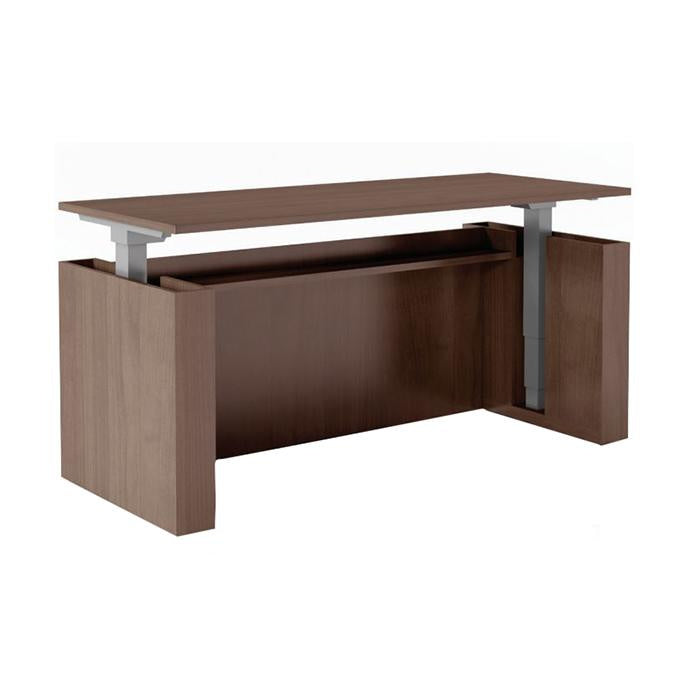
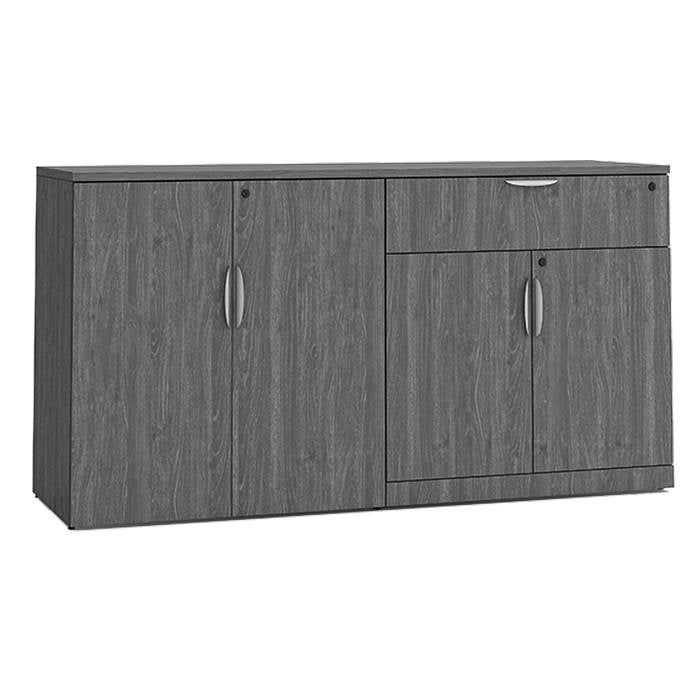
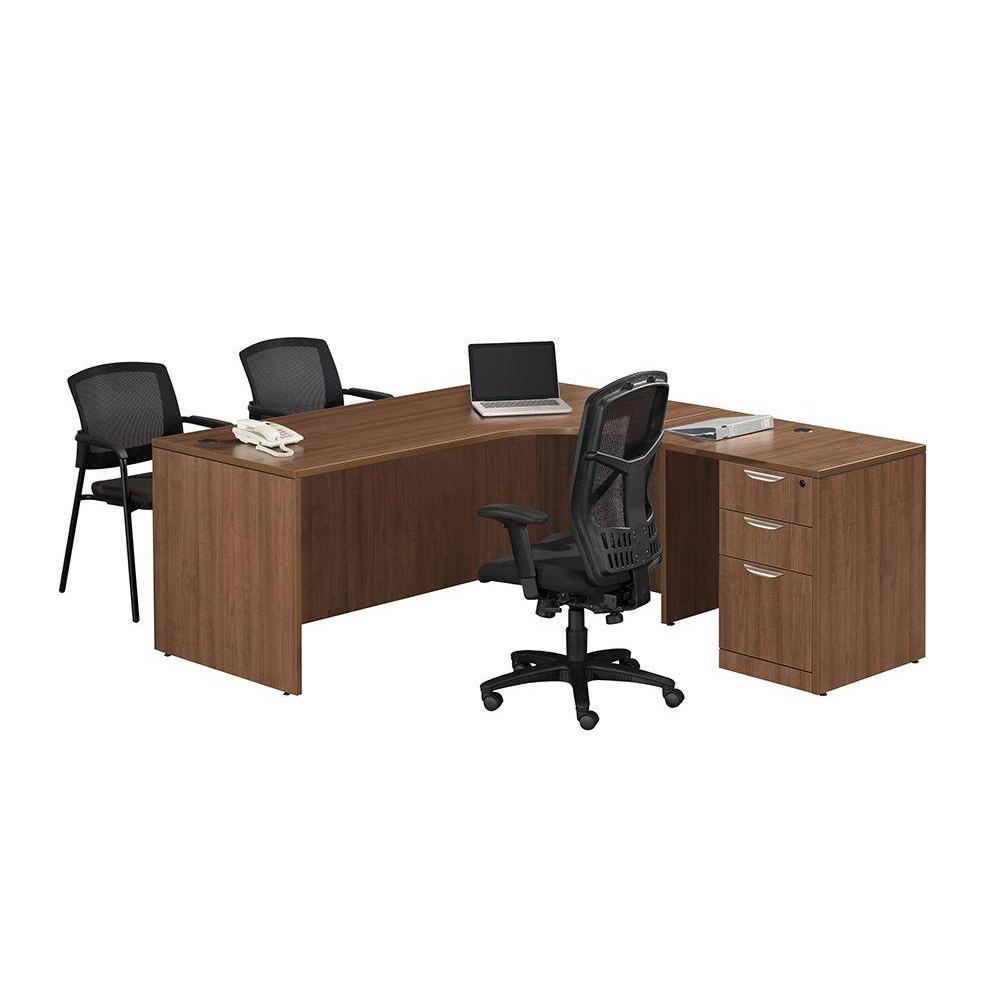
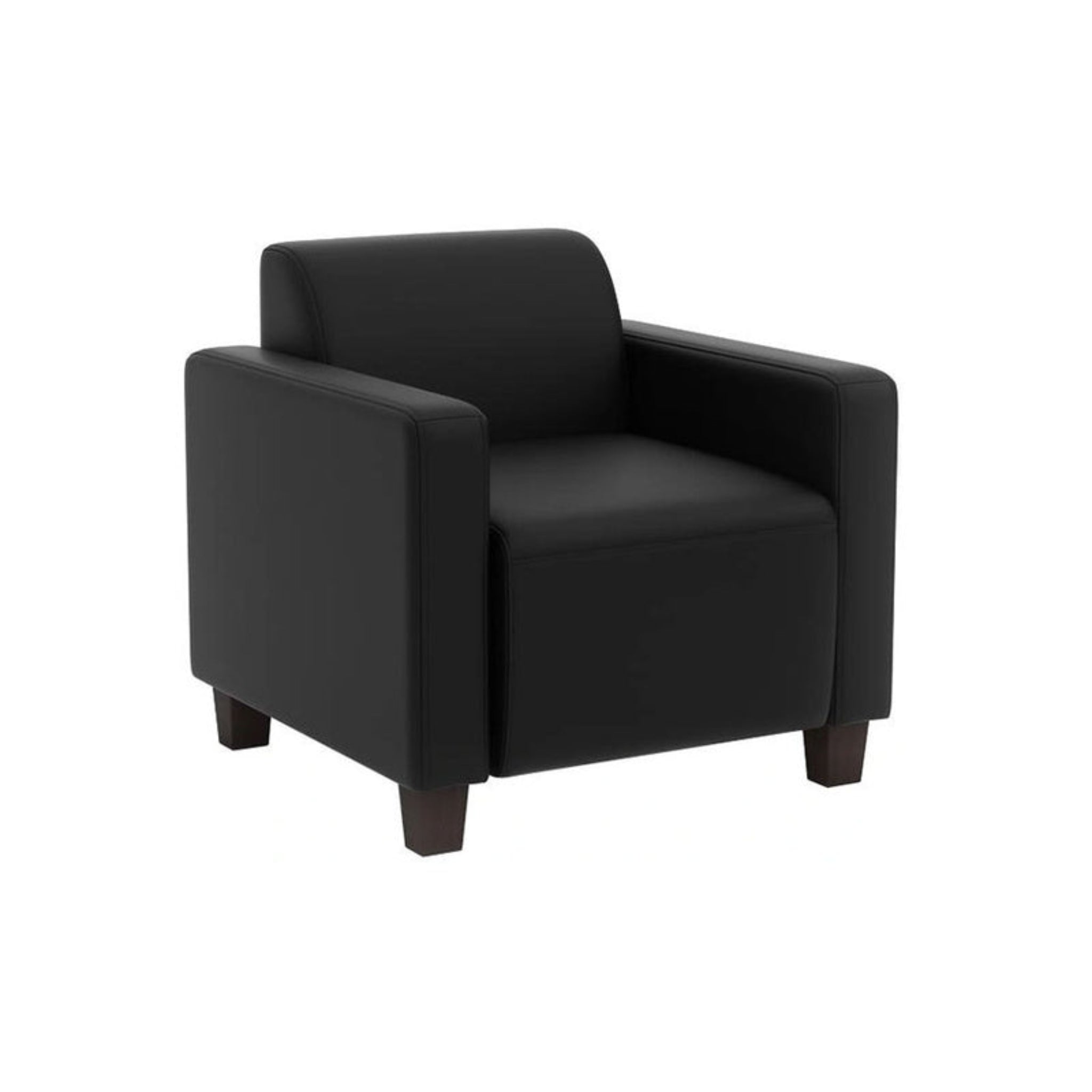
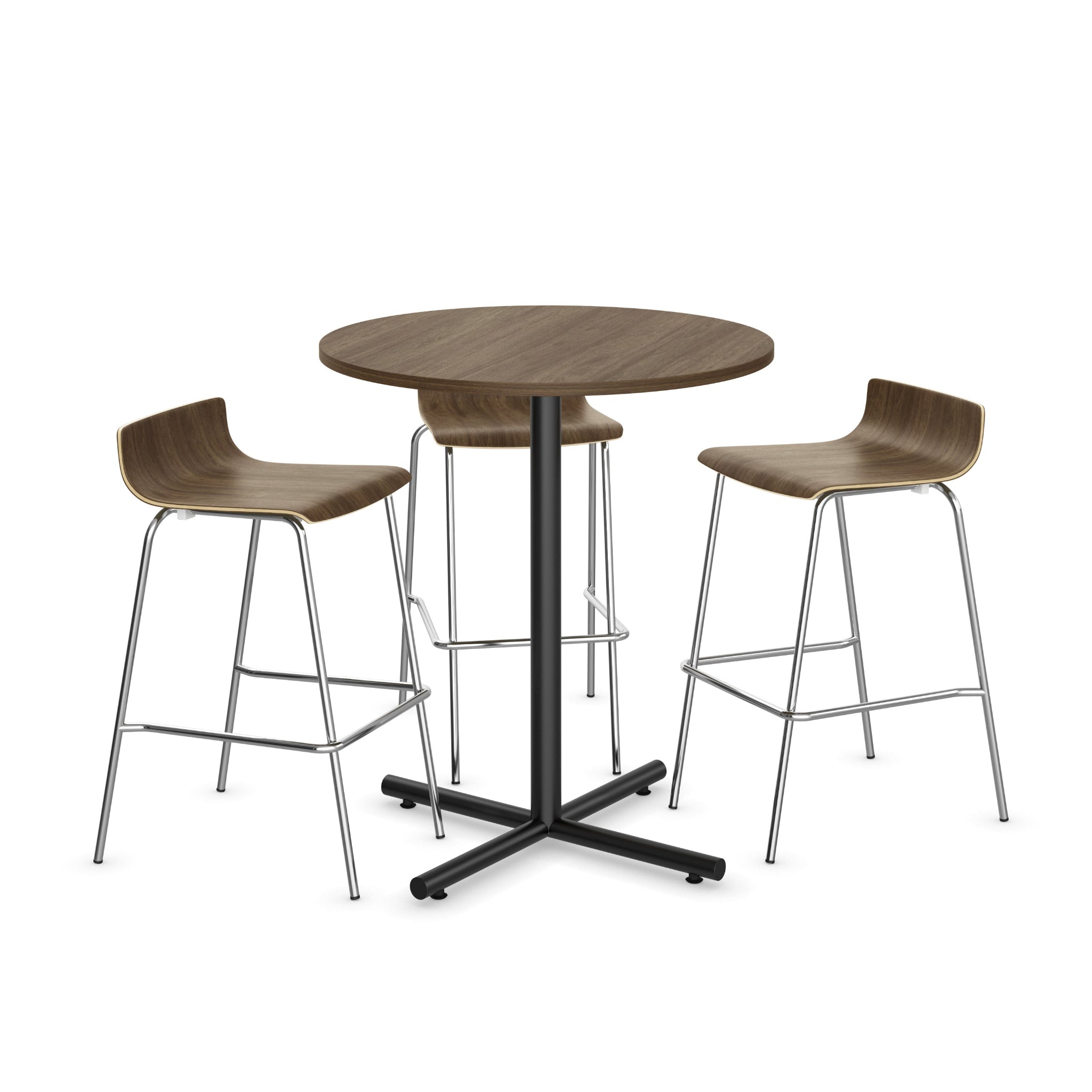
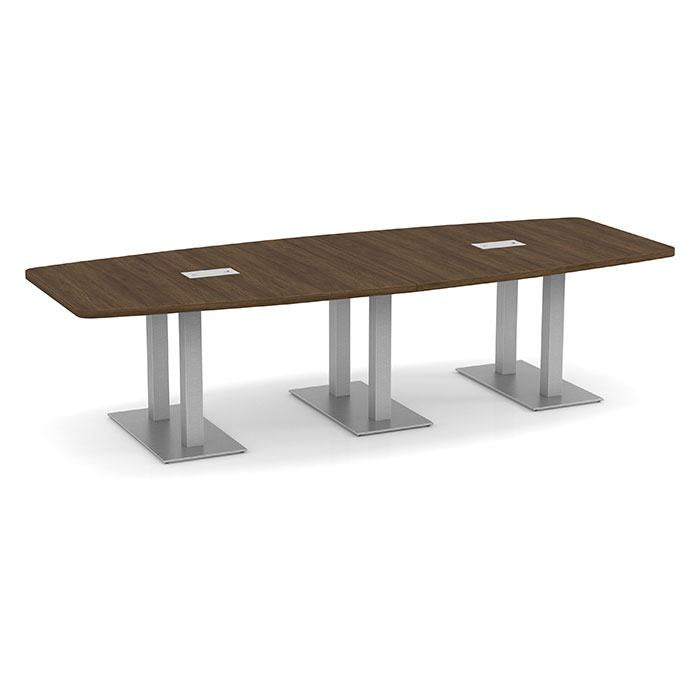
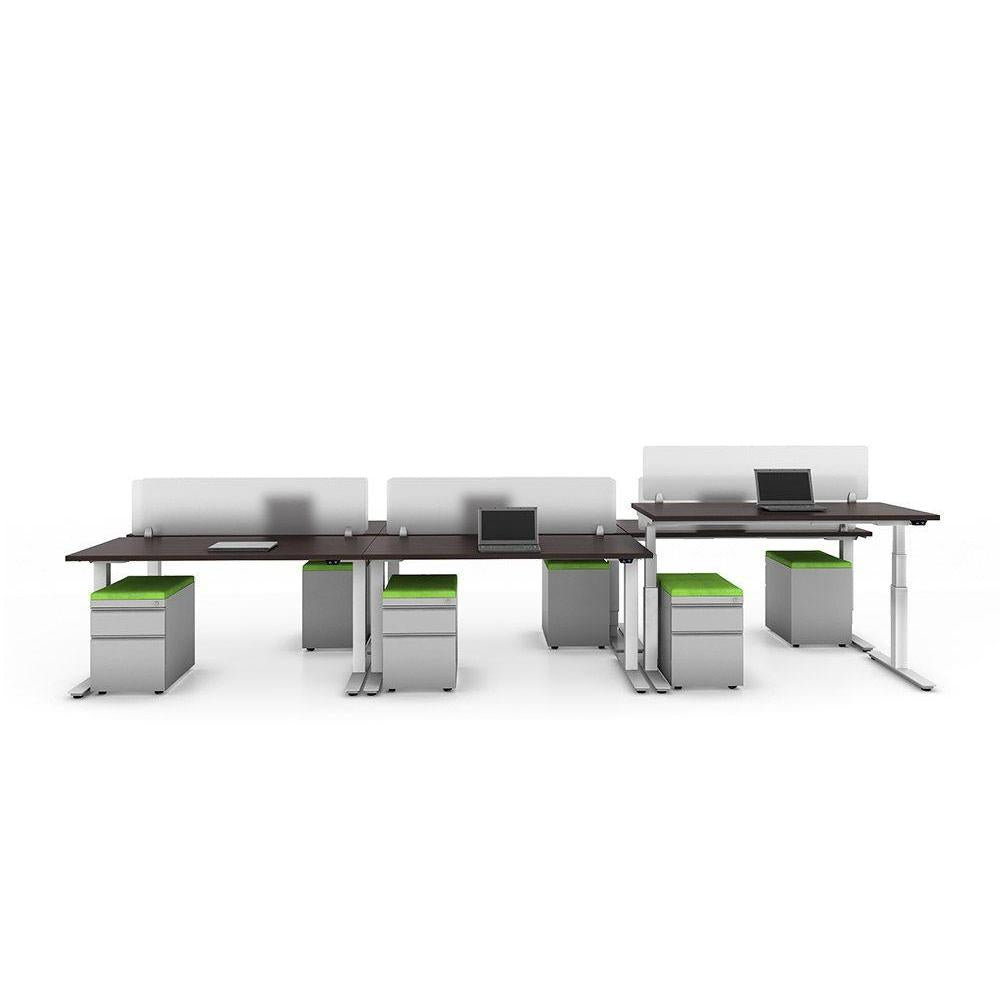
Every desk, credenza, and filing cabinet looks fine in a photo. This guide breaks down what's actually inside the panel, so you can see where the extra cost goes, and why it pays for itself over time.
The biggest difference between commercial and consumer furniture is invisible until you cut one open.
Big-box and RTA (ready-to-assemble) furniture is typically built around low-density particleboard, and in many budget lines, a honeycomb cardboard or hollow core wrapped in a thin skin of laminate or wood-grain foil. It's light and cheap to ship, which makes sense for a piece meant to be replaced in a couple of years. What it doesn't offer is much resistance to sagging under sustained weight, moisture, or repeated stress at the joints.
Commercial-grade casegoods are built around industrial-grade, high-density particleboard or plywood cores, engineered to hold screws, hardware, and connector fittings under years of daily load. That density is what keeps a desk from bowing under a monitor arm, or a file drawer from splitting at the corners after hundreds of open-and-close cycles.
Low-density particleboard or hollow honeycomb core. Light and cheap to ship. Prone to sagging and joint failure under sustained daily use.
High-density particleboard or plywood core. Holds hardware and connector fittings under years of load without bowing or splitting.
Run a finger along the edge of a piece of furniture and the difference is immediate.
Low-cost furniture usually has a thin strip of melamine or paper edge banding, often less than a millimeter thick, glued on as a finishing touch. It chips on impact, peels at the corners, and once it starts lifting, moisture works its way into the particleboard core underneath.
The commercial casegoods we sell use a 3mm PVC Dura-Edge: a thick, impact-resistant edge banding that's mechanically bonded to the substrate rather than glued on as an afterthought. It absorbs bumps from rolling chairs, carts, and daily wear without chipping, and it seals the core against moisture. That's the difference between a desk that looks the same in year ten and one that's delaminating by year two.
Browse commercial-grade casegoods →The surface takes the most daily wear of any part of a desk or table.
Budget furniture surfaces are usually a thin, low-pressure laminate, or in the cheapest cases, a printed foil, bonded directly to a thin particleboard top. It scratches easily, doesn't stand up well to heat or moisture, and once it's damaged there's no way to repair it. The whole top has to be replaced.
The casegoods we sell use 1" thick, high-pressure laminate construction, built to resist scratching, staining, heat, and impact from everyday office use: laptops, coffee cups, binders dragged across the top, repeated moves from room to room. It's designed to be the surface a team works on for a decade or more, not a semester or two.
Drawer hardware is where cheap furniture tends to fail fastest.
Budget storage pieces commonly use plastic rollers or epoxy-coated wire glides that bind, stick, or snap once a drawer is loaded with files and used daily. It's one of the most common reasons RTA filing cabinets and desk pedestals end up replaced within a year or two.
Commercial-grade casegoods are typically built with full-extension ball-bearing glides rated for repeated daily use under real file and supply loads, and that's the standard the furniture we sell holds to as well. They stay smooth for the life of the piece, which is exactly the kind of detail that doesn't show up in a product photo but shows up every single day the drawer gets opened.
Everything above, in one table.
| Feature | Commercial-Grade Casegoods | Big-Box / RTA Furniture |
|---|---|---|
| Core material | High-density particleboard or plywood | Low-density particleboard or hollow/honeycomb core |
| Edge banding | 3mm PVC, mechanically bonded | Thin melamine or paper banding (often under 1mm) |
| Work surface | 1" high-pressure laminate | Thin low-pressure laminate or printed foil |
| Drawer hardware | Full-extension ball-bearing glides | Plastic rollers or epoxy-coated wire glides |
| Warranty | Limited lifetime on many lines | Typically 90 days to one year |
| Expected lifespan | 15 to 20+ years of daily use | One to three years under regular office use |
General industry ranges shown for comparison. Specific specs and warranty terms vary by product and manufacturer.
Anyone can claim their furniture is built to last. This is how that claim usually breaks down by component.
| Core construction | Limited lifetime* |
| Edge banding | Limited lifetime* |
| Laminate surface | Limited lifetime* |
| Drawer hardware | Limited lifetime* |
| Typical big-box / RTA equivalent | 90 days to 1 year |
*Many of the commercial-grade casegoods lines we carry are backed by a limited lifetime warranty on core construction, edge banding, laminate surfaces, and hardware. Exact terms vary by manufacturer and product line. Ask your rep for the specific warranty on any item you're considering.
A $250 desk that needs replacing every 18 months isn't actually cheaper than a commercial desk built to last two decades. It's just cheaper today. Factor in the cost of repeat purchases, the labor of reassembly and disposal, and the downtime of swapping out furniture in a working office, and the math flips fast.
Commercial-grade construction isn't an upcharge for its own sake. It's the difference between buying furniture once and buying it every couple of years, indefinitely.
When you're furnishing an office that needs to hold up to real, daily use, not a bedroom that sees light traffic, the construction underneath the surface is what determines whether that purchase is a one-time decision or a recurring line item.
Usually, yes. But priced over its expected lifespan rather than its sticker price, commercial-grade furniture is typically the lower-cost option, since it isn't replaced every one to three years the way most RTA furniture is.
Check the core material and density, the thickness of the edge banding, the type of drawer glide, and the length of the warranty. Thin edge banding, plastic or wire glides, and a warranty under a year are all signs of consumer-grade construction.
No. US Discount Office Furniture sources and sells commercial-grade casegoods built to these standards by established manufacturers. We don't manufacture furniture ourselves, but we stand behind what we sell and can help you sort out warranty coverage on anything you buy from us.
Not necessarily. "Heavy duty" is a marketing term without a fixed definition. Commercial-grade generally refers to furniture built and tested to hold up under sustained daily office use, which is a higher bar than most consumer marketing language implies.