












Hot-Desking and Hoteling: Furniture That Supports Flexible Seating
Flexible seating is no longer just a startup trend. Hot-desking and hoteling have become a practical answer for offices with hybrid schedules, seasonal headcount swings, or simply more desks than people need on any given day. But flexible seating only works if the furniture is built for it. A desk designed for one permanent occupant creates friction the moment several different people start using it every week. Here's what actually makes a shared-seat office run smoothly.
Why Hot-Desking Needs Different Furniture
In a traditional office, furniture gets set up once and mostly stays that way. In a hot-desking or hoteling model, the same desk might host a different person every day, and each of those people has different storage needs, different monitor heights, and different amounts of stuff to keep track of. Furniture that supports flexible seating has to solve three problems at once: where personal items go when there's no assigned desk, how quickly a workstation can be adjusted for a new person, and how the space stays organized when nothing is permanently claimed.
Mobile Pedestals: Storage That Moves with Your Team
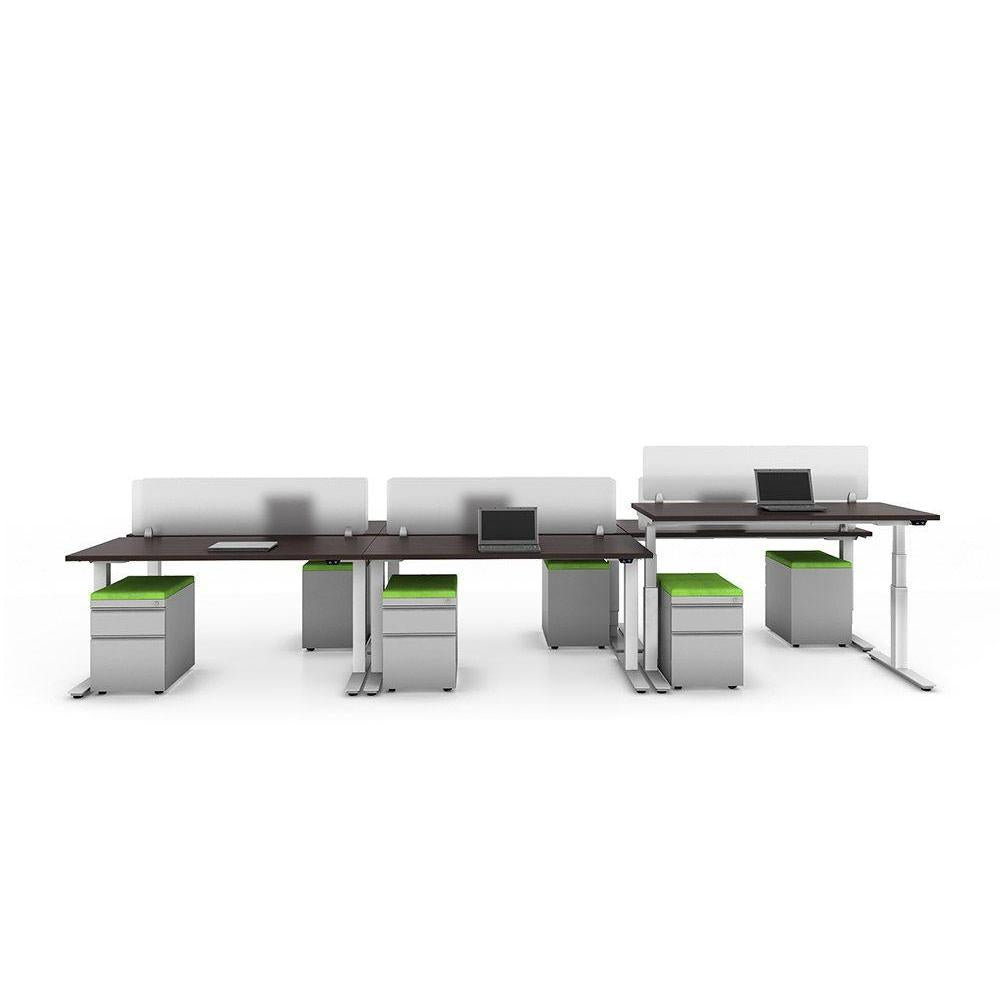
Mobile pedestals are one of the simplest fixes for hot-desking. Instead of storage built into a fixed desk, each employee gets a rolling pedestal they can bring to whichever workstation they've booked for the day, then tuck away at the end of the shift. Most come with a lock, so files and personal items stay secure without needing a dedicated desk to store them in. For offices transitioning away from assigned seating, mobile pedestals are often the first purchase that makes the new layout feel workable rather than chaotic.
Lockers for Personal Belongings
Not everything needs to travel to a desk. Coats, bags, spare chargers, and personal items are usually better suited to a bank of lockers near the entrance or break area. Lockers give employees a consistent, private place to store belongings even when they don't have a consistent desk, and they keep workstations clear for whoever's using them next. For larger hoteling programs, day lockers with simple key or code locks tend to work best since they turn over quickly and don't require IT involvement the way electronic access systems can.
Adjustable Desks That Fit Everyone
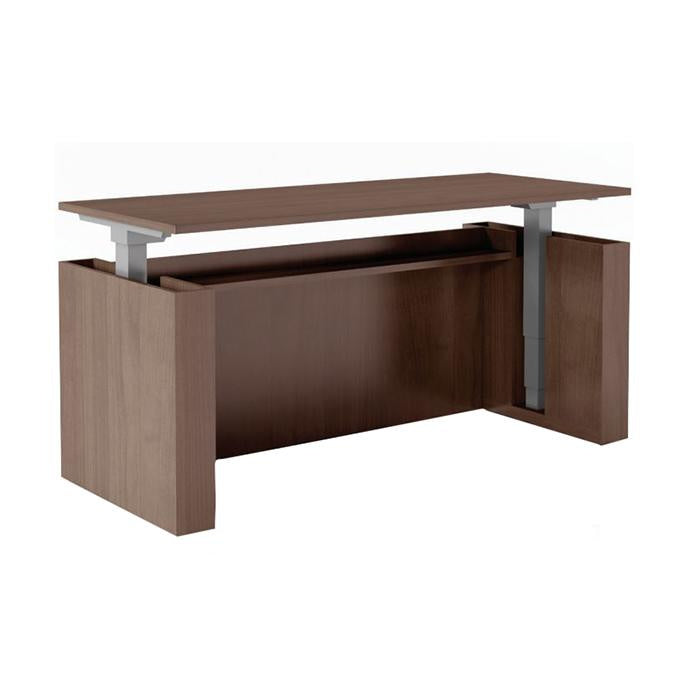
When a desk is shared by several people across a week, a fixed height stops working for almost everyone. Height-adjustable desks solve this without requiring each person to bring their own accessories: a quick adjustment at the start of a shift gets the surface to the right height, whether the next person is 5'2" or 6'4". Pairing height-adjustable desks with monitor arms and keyboard trays that reset easily makes the changeover even faster, since ergonomics don't have to be rebuilt from scratch every time someone new sits down.
Planning a Flexible Layout That Actually Works
The furniture pieces matter, but so does how many of each you need and where they go. A hoteling program that's short on lockers or has mobile pedestals parked in the wrong spots creates the same friction it was meant to solve. USDO's free office furniture space planning service can help map out ratios of desks to employees, locker counts, and traffic flow before you commit to an order, and our meet-or-beat pricing guarantee means you're not paying a premium to get it right. With nationwide shipping to all 50 states, outfitting one flexible floor or several locations follows the same straightforward process.
Ready to see what's available? Request free space planning and get a layout built around how your team actually works.
- Choosing a selection results in a full page refresh.