












How to Choose the Right Conference Table Shape for Your Room
The conference table is usually the first thing people notice when they walk into a meeting room, and its shape does more than set the tone. It determines how many people fit comfortably, how well everyone can see and hear each other, and whether the room feels cramped or spacious. Before you fall in love with a finish or a base style, it's worth thinking through which shape actually fits your room and the way your team meets.
Start With the Room, Not the Table
Measuring your space before you shop saves a lot of headaches later. A good rule of thumb is to leave at least 36 inches of clearance between the edge of the table and the wall (or any credenzas and cabinets) so chairs can slide out and people can walk around comfortably. Long, narrow rooms and wide, square rooms call for different shapes, so take note of your room's proportions, doorway location, and any built-in features like windows or AV screens before you start comparing tables.
Matching Shape to Meeting Style
Once you know your room's dimensions, think about how the space actually gets used. The shapes below each have a sweet spot:
- Rectangular: The most space-efficient option for narrow or standard-sized rooms. Great for structured meetings with a clear head of the table, and easy to pair with modular add-ons as your team grows.
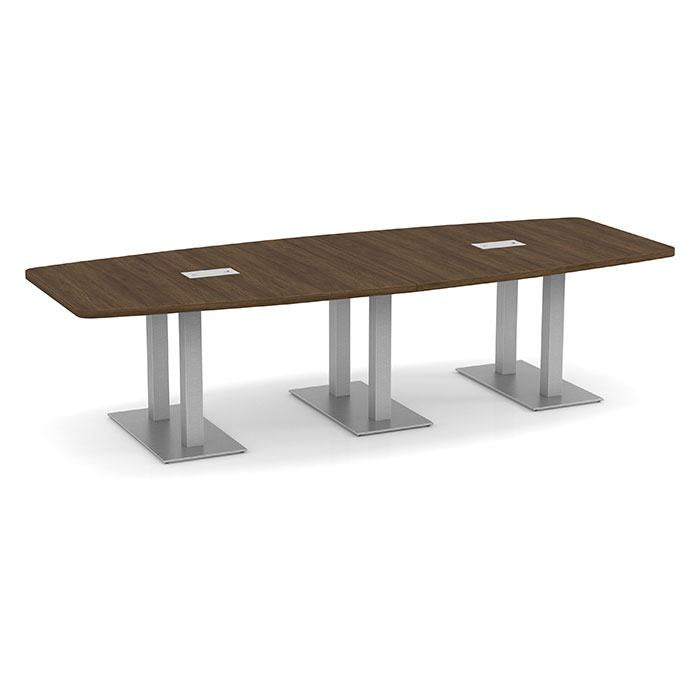
- Boat-shaped: A curved, tapered version of the rectangle that angles inward at both ends. The subtle curve improves sightlines to a screen or presenter and gives everyone a bit more shoulder room without adding much floor space.
- Racetrack: Similar to boat-shaped but with rounded ends instead of pointed ones. It softens the room visually and works well for collaborative discussions where you want people to feel more like equals around the table.
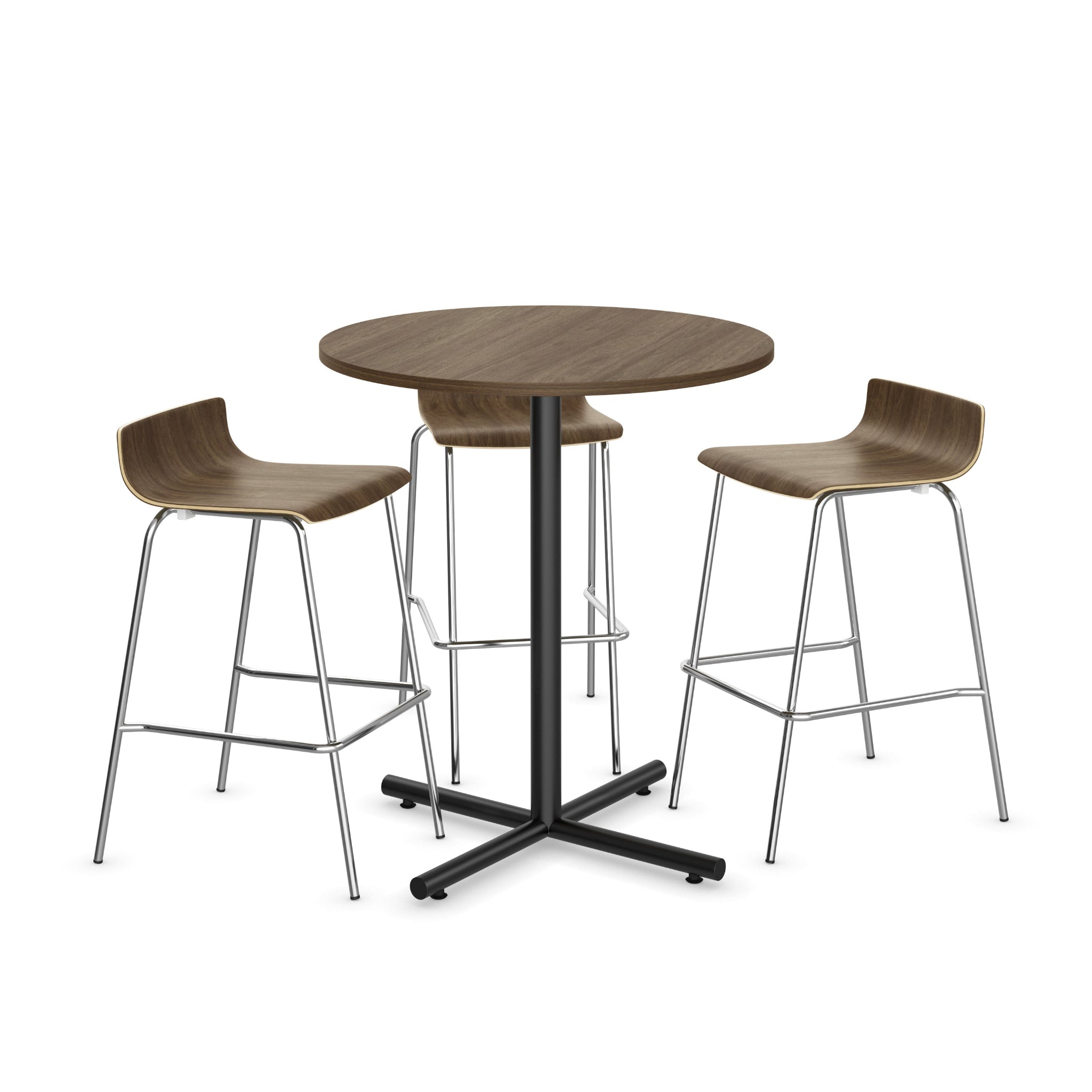
- Round: Best for smaller rooms and informal meetings. A round table removes the sense of hierarchy entirely, which makes it a strong choice for brainstorms, client conversations, or huddle spaces where four to six people need to gather quickly.
Don't Forget Capacity and Technology
Shape and size go hand in hand. As a general guide, plan on roughly 24 to 30 inches of table edge per seat so people aren't elbow to elbow. If your team relies on video conferencing, boat and racetrack shapes tend to work best since their curves naturally angle seats toward a screen at one end. If you're running power and data to the table for laptops and monitors, confirm the table you choose has (or can accommodate) grommets or a power module before you order.
Built for How You Actually Meet
There's no single right answer here. A 12-person boardroom that hosts client presentations has very different needs than a 6-person huddle room used for daily check-ins, and the table shape should reflect that. Take stock of your room dimensions, your typical meeting size, and how much of a formal hierarchy you want the room to convey, and the right shape usually becomes clear.
If you'd rather not guess, USDO's free office furniture space planning service takes the room dimensions and meeting style you're working with and turns them into a layout and quote at no extra cost. It's a fast way to land on the right shape, size, and finish before you commit, whether you're outfitting one boardroom or several offices at once.
Ready to find the right fit for your conference room? Request your free space planning consultation and let USDO help you choose a table shape that works as hard as your team does.
- Choosing a selection results in a full page refresh.