











Office Furniture in Minneapolis: What Six Months of Winter Does to an Office
Every office in the Twin Cities has the same two rooms: the one everybody sees in the brochure photo, and the twelve feet inside the front door where six months of salt, slush, and wet boots land. The second one is where the furniture budget actually gets tested.
Minneapolis offices deal with things that never come up in a buying guide written for a warmer market — ice melt chemistry on chair casters, a floor where it is fully dark by 4:30 in December, and a delivery truck that has to get a pallet through a loading dock in February. None of it is complicated. It just has to be planned for.
The Entry Is the Hardest-Working Furniture in the Building
Sodium chloride and calcium chloride are rough on finishes, and they get tracked across a lobby on every pair of shoes from November to April. Fabric-heavy reception seating in that zone looks tired fast.
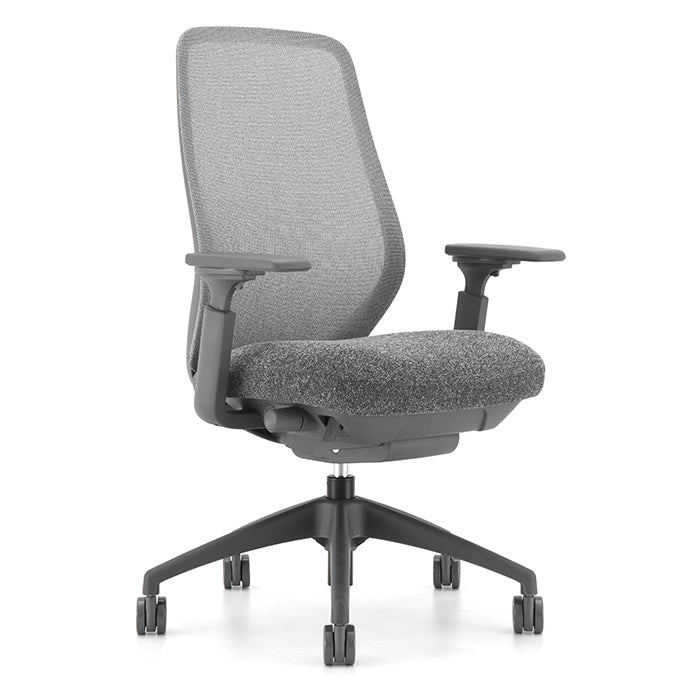
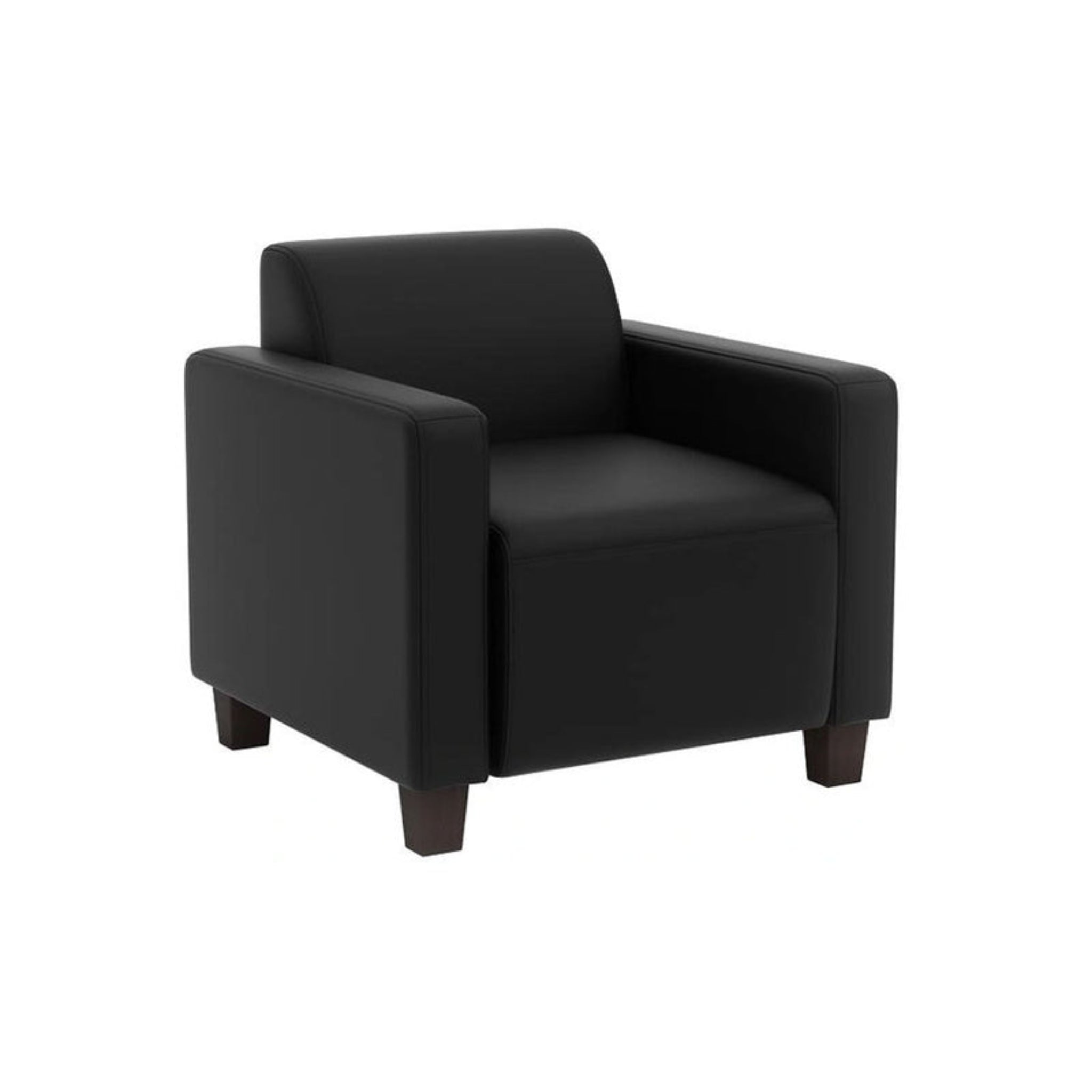
Specify for it instead of hoping. Wipeable upholstery on the guest chairs nearest the door — the Ashton Antimicrobial Guest Chair and the Daisy Stackable Guest Chair both clean up easily — and put a proper mat sequence at the entrance rather than one small rug. Sled-base and stacking chairs beat casters here, because casters pick up grit and grind it into whatever is underneath them. If you do have rolling chairs near the entry, a glass chair mat takes the abuse instead of the carpet.
Where the Winter Gear Goes
People arrive here wearing a lot of clothing for half the year, and every one of those coats, hats, scarves, and pairs of boots has to land somewhere. Offices that never solve this end up with parkas over chair backs, boots under desks, and a reception area that looks like a mudroom by 9:15.
Do the math honestly: a coat needs roughly a foot of hanging width once it's a real winter coat rather than a blazer, so a closet sized for twelve people is not a closet sized for twelve winter coats. A run of personal storage towers gives each person a full-height space for a coat plus a shelf for boots and gloves, which a shared rail does not. In hybrid offices where desks are shared, that matters more rather than less — people need somewhere that belongs to them even when the desk doesn't.
Two details that get missed. Put the coat storage where people actually enter, not in a back corridor, or nobody uses it. And keep it off the carpet if you can: wet gear drips, and a wardrobe cabinet sitting on hard flooring near the entry survives the season far better than one on plush carpet.
Dark Afternoons Are a Finish Problem
From late November through January, most of the workday happens after the good light is gone. A floor of dark laminate under fluorescent fixtures at 4:00 p.m. in January is genuinely dreary, and the fix is the same one that works in any northern market: put light on the big surfaces.
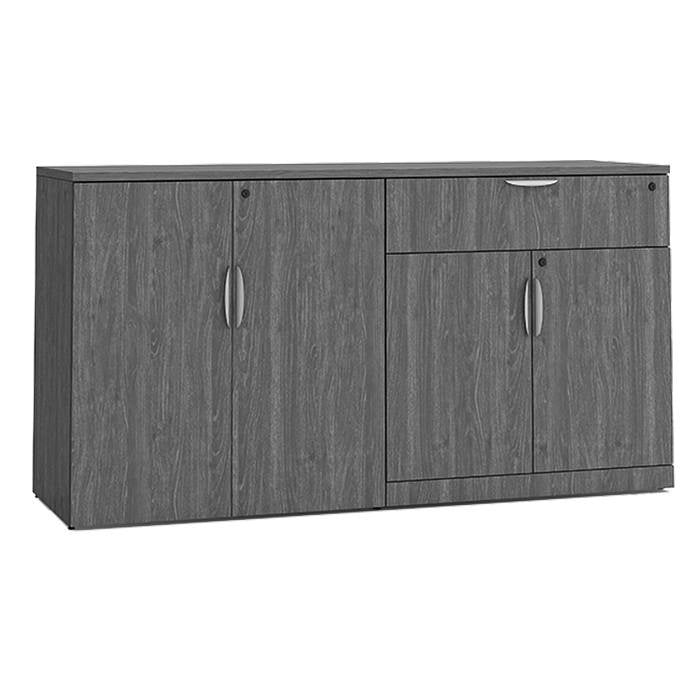
Lighter work surfaces — Aspen, Silver Birch, white — reflect what light you have instead of absorbing it. Glass-door storage cabinets keep a back wall from reading as a solid block. And an LED task light at each desk does more for how a workstation feels in winter than any ceiling retrofit, for a fraction of the cost.
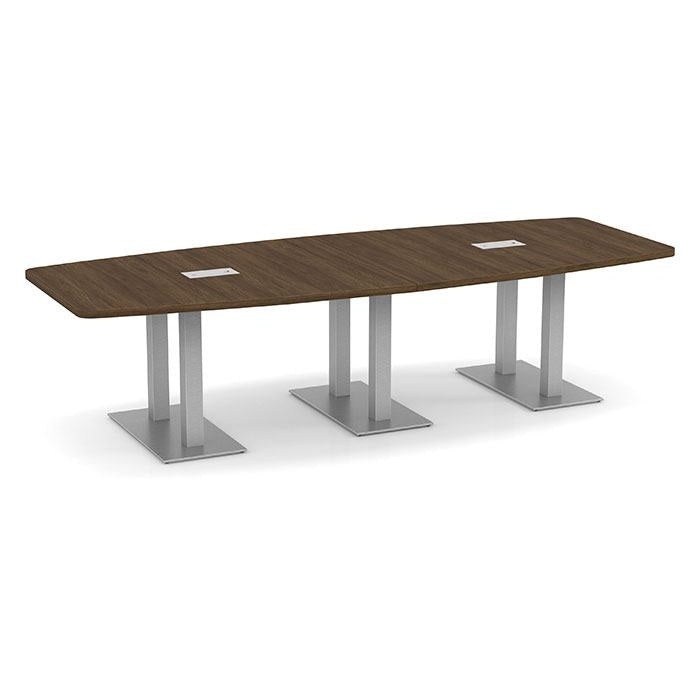
It is also worth leaning into warmth where people gather. Wood-tone conference tables, soft seating in a breakroom, and a plant-friendly layout with real surfaces to put plants on all read better in February than a lobby done entirely in gray.
Winter Delivery Is Its Own Planning Exercise
Furniture arrives on an LTL freight truck, on pallets, and in January that truck is dealing with the same roads you are. A few things that save a delivery day:
- Confirm the dock and the approach. Snowbanks narrow loading areas. If a 53-foot trailer can't turn in, the delivery fails at the curb.
- Have an inside staging area cleared. Cardboard and shrink wrap should not be opened outside in a wind chill — condensation on cold laminate is real.
- Let the pallets acclimate. Give furniture a few hours indoors before assembly rather than unboxing it the moment it comes off a frozen truck.
- Build in schedule slack. A storm closes I-94 and the whole regional freight network shifts a day. Plan install for mid-week, not the day before you open.
Our shipping and delivery page covers what to expect, and we can quote inside delivery and installation so the pallets aren't your problem at all.
Buy for the Reconfiguration You'll Do in Three Years
Twin Cities companies tend to stay put. Leases here run long, headcount moves in both directions, and the same floor often gets rearranged several times before anyone moves buildings. That makes flexibility worth more than it is in a market where everyone relocates every four years.
In practice: buy standard configurations and finishes rather than one-off custom pieces, so the desk you add in 2029 still matches. Prefer systems furniture that comes apart and goes back together over built-in millwork. Choose mobile pedestals over fixed drawer banks, and tables that gang and nest over fixed-base conference tables in any room that might change function. And keep a written record of the exact finish names and model numbers you bought — it is the cheapest thing on this list and the one people always wish they had done.
What Twin Cities Offices Tend to Buy
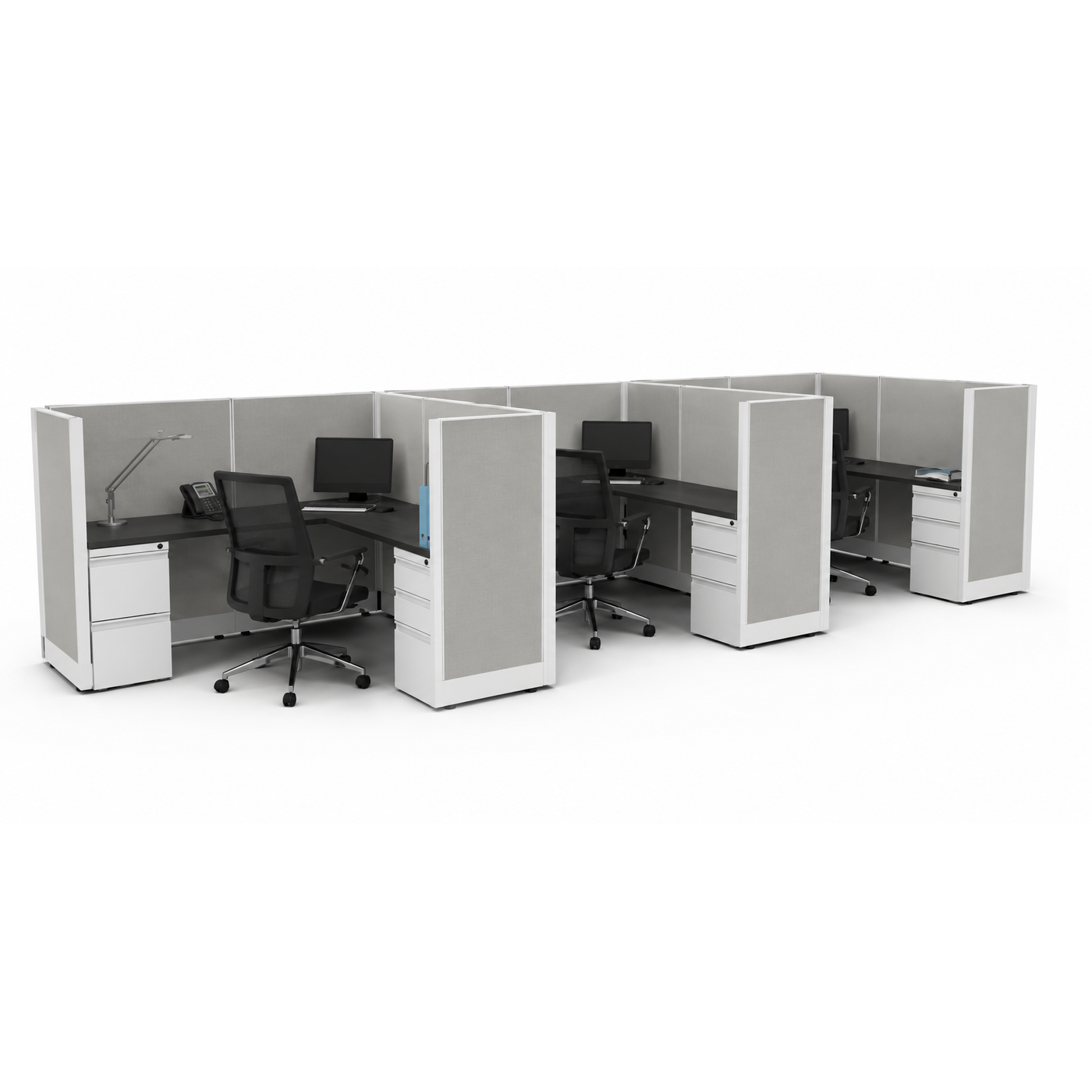
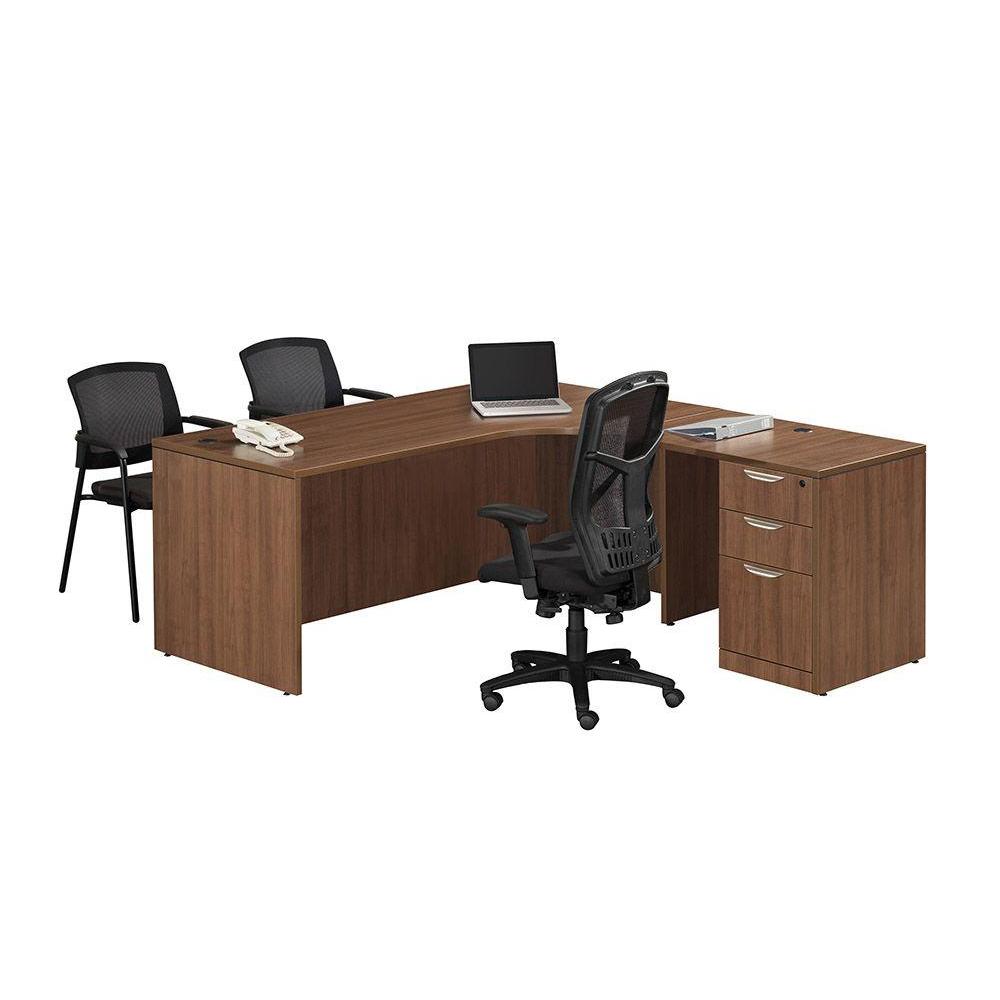
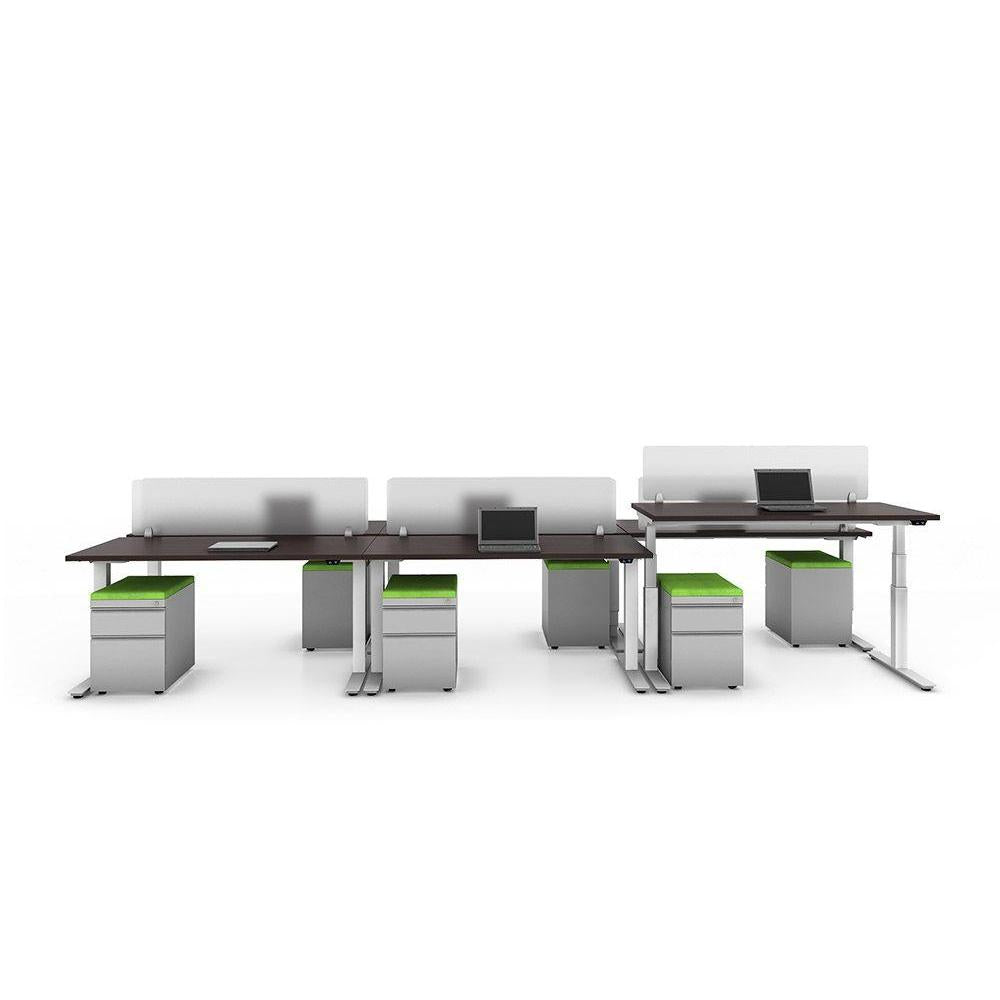
This is a headquarters town — a dense concentration of large corporate offices across Minneapolis, St. Paul, Bloomington, and the western suburbs — which means a lot of open-plan floors, a lot of conference rooms, and steady demand for workstations that can be reconfigured. Our Systems In-Stock Cubicles ship new in two- to eight-station packs, and conference tables and conference seating tend to move together.
Skyway-connected buildings add one wrinkle worth mentioning: your freight path may run through a shared corridor with elevator and after-hours restrictions. Ask building management before you set an install date, not after.
Shop New Office Furniture for Your Twin Cities Office
Everything above is new commercial-grade furniture you can order online, with delivery across Minneapolis, St. Paul, and the surrounding suburbs. Start with desks, seating, or reception furniture.
For a full floor or a multi-room project, request a quote — it comes with free space planning, our meet-or-beat price guarantee, GREENGUARD-certified options, and shipping to all 50 states. To sit in the chairs before you buy, the Minneapolis-area partner showroom in Saint Louis Park takes appointments.
- Choosing a selection results in a full page refresh.