












Reception Area Furniture Design: Making the Right First Impression
A visitor decides how they feel about your company in about ten seconds, and they make that decision standing in your lobby. Not reading your website, not in the conference room, not after the pitch. In the entryway, before anyone has said a word to them.
That makes reception one of the highest-leverage rooms you'll furnish and one of the most commonly rushed. It usually gets whatever budget is left after the workstations are covered, which is how offices end up with a beautiful floor of desks and a lobby that feels like a waiting room at the DMV. A little planning goes a long way here.
Start With the Desk, Because It Sets the Tone
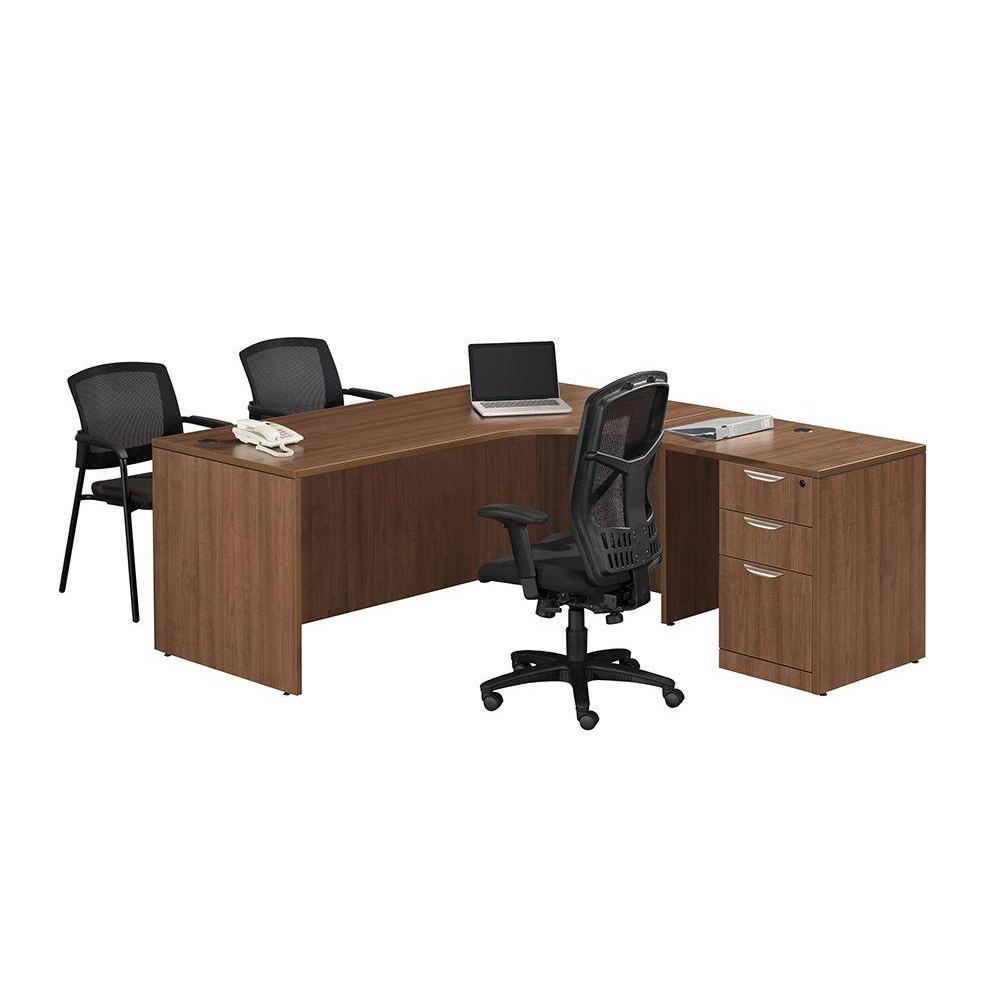
Your reception desk is doing three jobs at once: it gives your receptionist a real workstation, it gives visitors an obvious place to go, and it signals what kind of company you are. A single-desk reception center works for most small offices. A U-shape or two-person station makes sense when you have consistent visitor volume, a shared check-in and administrative role, or two people covering the front.
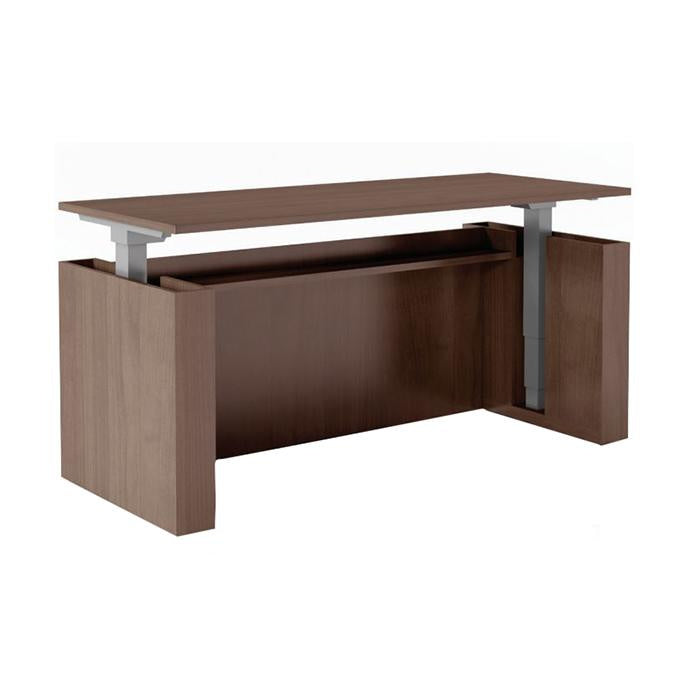
The transaction counter matters more than people expect. A raised counter gives visitors a surface to sign or set things down while screening the receptionist's monitor, paperwork, and coffee cup from view. Glass or acrylic transaction tops add a bit of polish and some separation without the closed-off feeling of a full partition, which is why they've become popular in medical, dental, and municipal settings.
Whatever shape you choose, make sure your receptionist actually has room to work behind it: pedestal storage within reach, clear cord routing, and enough surface for a monitor plus whatever they handle all day, whether that's packages, badges, or intake forms.
Sizing Guest Seating Honestly
The most common seating mistake is planning for the average day instead of the busy one. Count your realistic peak: how many people are ever waiting at the same time, including anyone who arrives with them.
- Two to four chairs suits most professional offices with scheduled appointments.
- Six or more, or a mix of chairs and multi-seat units, fits medical practices, schools, and any lobby with walk-in traffic.
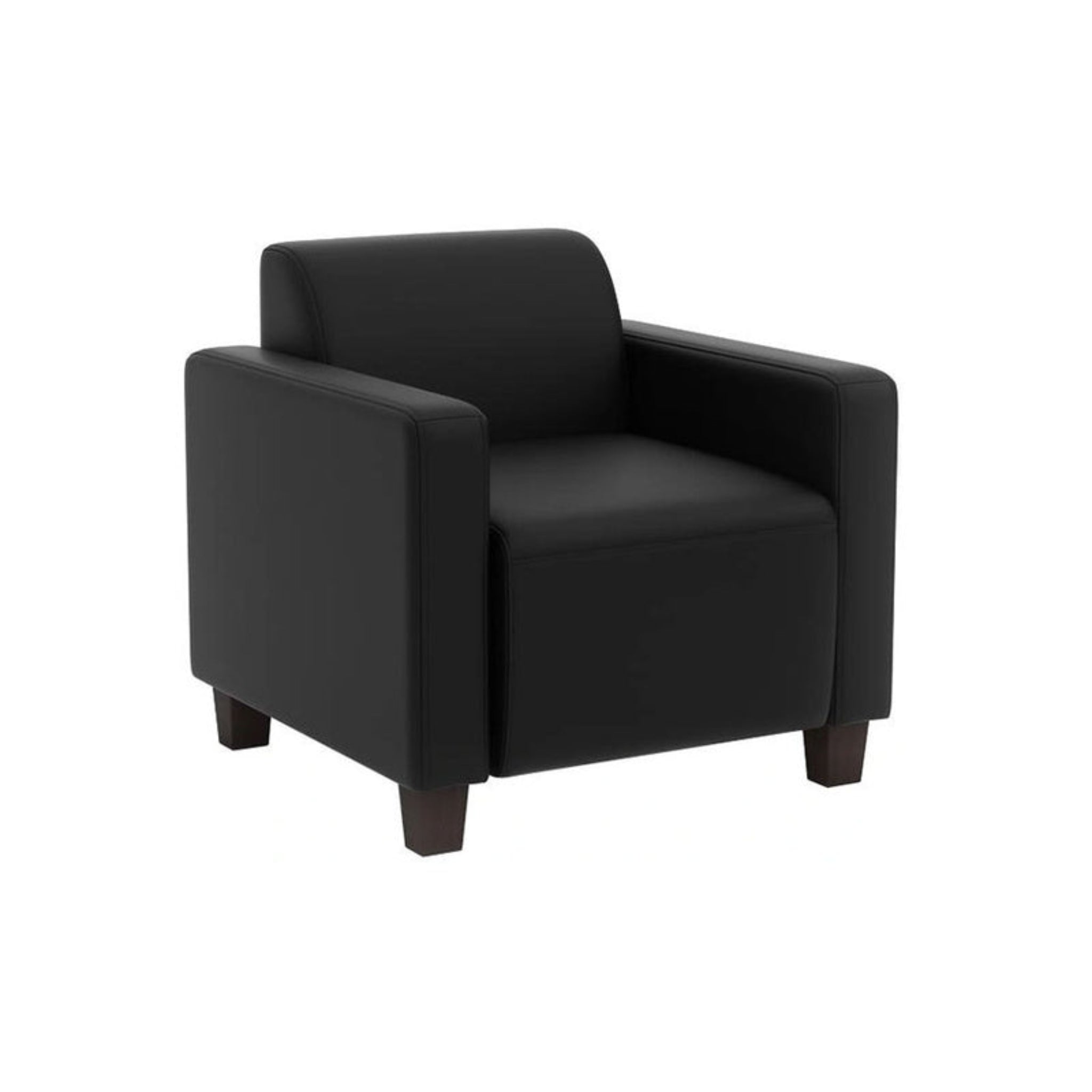
- Club chairs and lounge seating read as warm and unhurried, and work best where people wait five or ten minutes.
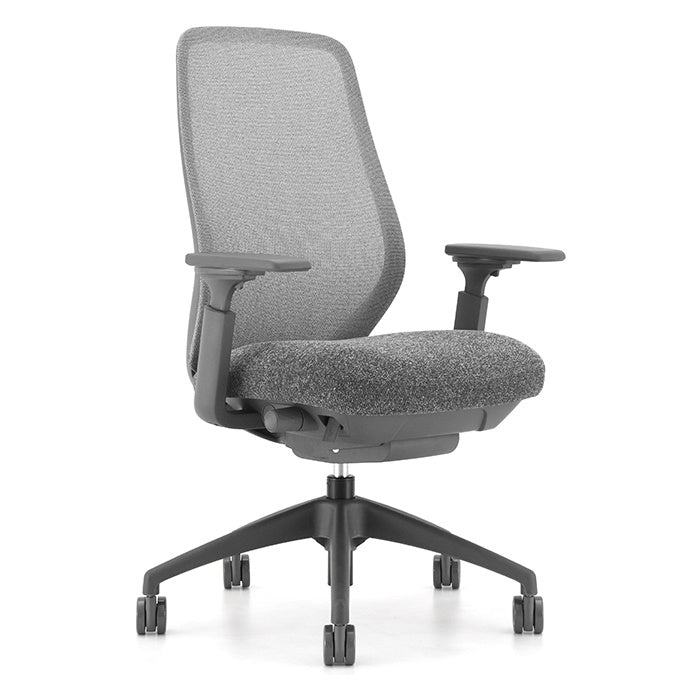
- Guest chairs with arms are the practical default and easier for older visitors to get in and out of.
- Ganged or bench seating maximizes capacity in narrow lobbies and stays neat because nobody drags it out of position.
Add at least one occasional table. A visitor with a bag, a coffee, and a phone and nowhere to put any of it never quite settles in.
Traffic Flow, Accessibility, and the Small Details
Walk your lobby the way a stranger would. The path from the door to the desk should be obvious without signage, and it shouldn't cross in front of seated guests. Keep clear circulation space around the desk and between seating so wheelchairs and strollers move through easily, and make sure at least part of your transaction surface sits at an accessible height.
Then handle the details that quietly signal competence: a place for coats or umbrellas, a power outlet reachable from a seat, lighting that isn't the harsh overhead fixture the rest of the floor uses, and finishes that match your brand rather than fighting it. Warm woods and neutrals with one accent color in the guest seating almost always land well.
See It Laid Out Before You Buy
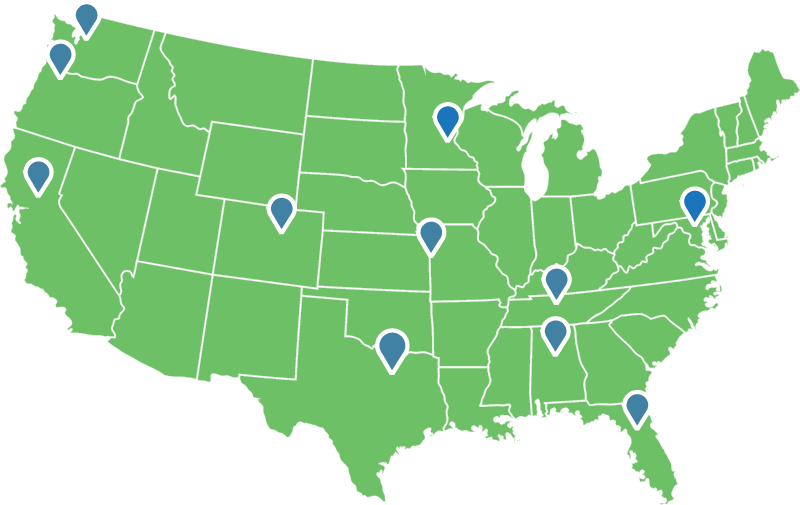
Lobbies are small rooms with a lot of demands on them, and the difference between a layout that flows and one that feels cramped is often a few inches. That's exactly what USDO's free office furniture space planning is for. Send us your dimensions and we'll lay out desk options and seating to scale, all in new commercial-grade furniture, backed by our meet-or-beat pricing guarantee, with GREENGUARD-certified options available and shipping to all 50 states. If you'd rather sit in the chairs first, our eleven partner showrooms are in Baltimore, Birmingham, Dallas, Denver, Kansas City, Minneapolis, Nashville, Ocala, Portland, Sacramento, and Seattle.
- Choosing a selection results in a full page refresh.