Commercial furniture rarely wears out from use. It wears out from grit, from standing water, and from cleaning chemistry that is stronger than the finish it lands on. This guide covers what actually keeps each material going, and the specific mistakes that shorten its life.
Nearly every ruined worksurface, hazed chrome arm, and ringed seat cushion we see traces back to one of three habits. Get these right and the material-specific advice below becomes fine tuning.
Several light applications beat one heavy one on every soft material. Over-wetting is the single most common cause of a spot that looks worse after cleaning than before.
Cleaner left on a surface keeps working. On fabric it attracts soil, on laminate it can etch, on vinyl and metal it discolors. Follow every cleaner with a clean water-damp cloth.
Scouring pads, powders, steel wool, and melamine foam erasers work by removing material, so on a coated or gloss surface they take the finish along with the stain. Where a mild exception applies, such as a baking soda paste on laminate, it is called out below.
A lot of offices adopted daily whole-room disinfecting in 2020 and never rolled it back. In a normal office that is not a hygiene requirement, and on furniture it is actively destructive. The CDC's guidance since 2021 has been that routine cleaning once a day is enough when nobody sick has been in the space, and that disinfection is for the situation where someone confirmed sick was present in the last 24 hours.
The damage is slow, which is why it goes unnoticed. Quaternary ammonium wipes attack the lacquer topcoat on coated fabrics and vinyl first, then the coating underneath, so failure typically shows up 12 to 24 months after the routine starts. On hard surfaces, repeated disinfectant use causes dulling and pitting, then corrosion on metal and cracking on plastic. In most of these cases the culprit is not the chemical, it is the residue nobody rinsed off.
Apply it, let it dwell for the time on the label, then remove it with a clean cloth dampened with plain water. Never let it dry in place. Disinfect high-touch, multi-user points by exception rather than every surface on a schedule, and check your product's pH: many janitorial disinfectants sit far outside the pH 6 to 8 band that sit-stand desk components specify, and anything at pH 10.5 or above can damage vinyl.
One operational note worth passing to whoever does the cleaning: a bleach solution loses effectiveness within about a day. A week-old spray bottle in the janitorial closet is still damaging surfaces but is no longer disinfecting them.
Every commercial textile carries a cleaning code, and it overrides all general advice. If you cannot find the code for a fabric, treat it as the most restrictive option.
| Code | What it means |
|---|---|
| W | Water-based cleaning agents only |
| S | Solvent (water-free) cleaners only |
| WS | Either water-based or solvent cleaners |
| X | Vacuum or light brushing only. No liquid of any kind |
Bleach is never a general-purpose method on textiles. Bleach cleanability is a property of specific fabrics, generally solution-dyed synthetics, and the published dilution varies from 1:4 to 1:10 depending on the textile. Use the ratio published for that fabric rather than a standard one, and never put bleach on wool, flax, or hemp.
Clean with a damp non-abrasive cloth and mild detergent, working in a rotating motion, then rinse with clean water on a second cloth and dry with a third. For stubborn marks, escalate to a paste of baking soda and water, then to a cotton ball held on the stain with isopropyl alcohol. If a cloth will not do it, step up to a nylon-bristle brush, never a metal or abrasive one.
What ruins laminate: melamine foam eraser sponges, which are marketed as miracle cleaners and are in fact a fine abrasive that removes the gloss along with the stain and leaves a permanent dull patch. Also drain cleaners, toilet bowl cleaners, rust removers, and anything strongly acidic or alkaline, all of which cause permanent damage. Bleach and hydrogen peroxide are a genuine split between manufacturers, so the safe default is to avoid both.
The failure that actually costs money is water. The laminate face is waterproof; the particleboard or MDF core behind it is not. Pooled liquid migrates through a seam or the unsealed underside, the core swells, and the laminate lifts. That is irreversible. Never flood the surface, especially near seams and around grommets.
Dust with a slightly damp lint-free cloth and wipe dry, always along the grain, so any fine scratching hides in the grain rather than crossing it. Once a month, clean with a soft cloth dampened with a cleaner formulated for wood furniture, again along the grain. Blot spills immediately, because a veneer finish resists ink, beverages, and nail polish remover only for as long as it takes you to get there.
What ruins veneer: aerosol furniture polish, which is the most common consumer advice and is prohibited by the manufacturers that address it. Aerosol polishes are typically silicone-based, and silicone builds a film that cannot be removed by normal cleaning, traps dust, and causes adhesion failure if the piece is ever refinished. Wax and oil polishes are nearly as bad. Rubber feet left directly on the finish cause permanent staining from plasticizer migration, so use felt pads.
Manufacturers disagree on whether to polish veneer at all. Modern catalyzed and UV-cured office finishes generally need none. If you do polish, use something wax-free, oil-free, silicone-free, and non-aerosol, and check your manufacturer first, because at least one prohibits polish outright.
Veneer is also the material most sensitive to your building. Keep relative humidity in the 35 to 65 percent range and the temperature between 60 and 80°F. Winter heating dropping indoor humidity is a common cause of cracked veneer and split panels in offices.
Office glass is really four different products, and the correct cleaner for one damages another. In all cases, apply the cleaner to the cloth, not to the glass, so overspray does not run down into the frame channel and sit against powder coat and fabric.
| Type | Use | Avoid |
|---|---|---|
| Clear and tempered | Ammonia-free glass cleaner, or mild soap and water, on a lint-free microfiber cloth | Ammonia, solvents, abrasives, edge impact |
| Etched or frosted | Dry cloth, or a rag dampened with warm water. Allow 24 to 48 hours to look clear again, since moisture sits in the etch pores and reads as cloudiness until it fully evaporates | Any soap or chemical, which lodges in the etch pores and streaks permanently |
| Back-painted | Isopropyl alcohol on a lint-free rag, user side only | Cleaning the painted back at all. These coatings are often water-based and can lift |
| Marker board | Erase fully after every use, clean weekly with board cleaner | Routine alcohol wipes, which degrade the finish over time |
A tempered glass tabletop is strong across its face and vulnerable at the edge. An edge chip is not just cosmetic, it is a weak point that can lead to breakage under stress later, so inspect edges rather than ignoring small nicks.
Both clean with mild detergent and warm water, rinsed thoroughly and dried. On powder coat, avoid abrasive, acidic, alcohol-based, and solvent-based cleaners: solvents and alcohol haze the cured film, acids attack the pretreatment layer underneath so the coating later flakes, and abrasives cut through at edges and corners where the coating is thinnest. Keep color-matched touch-up paint on hand, because repairing a chip prevents corrosion creeping under the coating.
On chrome, the thing to watch is chloride. Prolonged bleach contact drives pitting under the plating, which surfaces later as rust blooming from beneath the chrome and cannot be fixed. Uncoated polished aluminum needs its own routine: paste wax monthly in humid or coastal air, every three months elsewhere, because the wax is the only corrosion barrier it has.
Alcohol is generally tolerated on bare plated metal and risky on coated or painted metal. Most chairs have both on the same frame, so identify which you are wiping.
Vacuuming is the whole game. Dust and grit settle into the weave and act as an abradant, so every time someone sits down they are effectively sanding the fabric from the inside. Vacuum regularly with an upholstery attachment, not a rotary brush head, which causes pilling and can permanently change the nap.
For spills, act immediately, blot rather than rub, and work from the outside of the stain inward so you do not push the edge outward. Water-based stains on a W or WS fabric take lukewarm mild soapy water on a well-wrung cloth. Oil-based stains on an S or WS fabric take a water-free dry-cleaning solvent. Solid residue is easier if you freeze it with ice until brittle and lift it with a dull edge. Rinse with cool water and air dry, then vacuum once dry.
Excess water wicks outward through the fabric, carrying dissolved soil with it, and deposits that soil as a hard tide line at the drying perimeter. The ring is not new dirt, it is the dirt from the middle of the spot relocated to the edge. The fix is technique, not chemistry: several light applications instead of one heavy one, and never letting liquid pool in the seams.
What to avoid: heat during spot cleaning, including household steam cleaners, because heat sets protein stains permanently and can glaze synthetic fibers. The one exception is professional hot-water extraction as an annual deep clean, which is a controlled process on the whole panel rather than heat applied to a fresh stain. Water on wool unless that specific fabric's code allows it, because wool can shrink and felt irreversibly. Aftermarket spray-on fabric protectors, which are a documented cause of premature fabric failure on factory-finished performance textiles and can affect warranty coverage. And leaving cleaner in the fabric, which makes it re-soil faster than before you started.
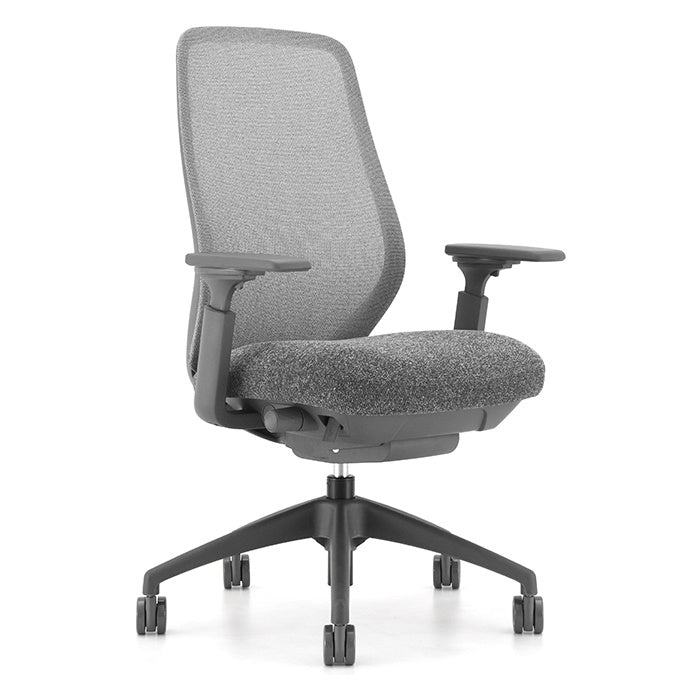
Mesh is an elastomeric monofilament weave held under permanent tension. No backing, no foam, no absorbency, which changes every rule. Vacuum with an upholstery attachment, and for soiling use a well-wrung cloth with a light neutral detergent.
The one technique worth learning: hold a clean towel against the back of the mesh while you clean the front. It gives you something to blot against, keeps solution from running through onto the seat and floor, and stops you stretching the weave. Then rinse and pat fully dry with microfiber.
What to avoid: hard-bristle brushes and vigorous scrubbing, because snagging one monofilament in a tensioned weave starts a run that cannot be repaired and means replacing the entire back. Paper towels, which shed lint into the weave and turn abrasive when wet. Heat, which relaxes the elastomer and permanently slackens the tension into a sag. And routine disinfectant wipes, since mesh cannot really be rinsed, so residue accumulates in the weave with every pass.
Commercial leather is pigment-finished, meaning a thin polymer topcoat over the hide. Dust or vacuum frequently with a dry cloth, which is most of the job. When it needs more, use a lather of mild soap and lukewarm water, wipe with a damp cloth, and dry.
Do not spot clean leather. Clean the entire panel, the whole seat or the whole arm as a unit. Cleaning a three-inch circle leaves a permanently visible clean halo, because leather's sheen and soil patina change as a whole. For grease and oil, do not use water at all: wipe with a dry cloth and let the remainder dissipate into the leather over a day or so. Water on a grease spot drives it deeper and leaves a permanent dark ring.
What to avoid: saddle soap, solvents, oils, furniture polish, abrasive cleaners, detergents, window cleaner, and ammonia. All of these either dissolve the pigment topcoat or swell and soften it, which is why mistreated leather turns sticky and then crazes. Never use a hair dryer or other heat to speed drying. If your leather has been through repeated alcohol or quat disinfecting, it needs a restorative step, because those strip the surface and leave it prone to drying and cracking.
Bonded leather is a polyurethane-coated composite rather than a hide, so it follows vinyl chemistry, and it is the least durable of the three seating surfaces. Clean both with a mild detergent solution on a soft cloth, rinse, and wipe dry.
What to avoid, and this is the important one: solvent-based cleaners leach the plasticizer out of vinyl. Plasticizer is the only reason vinyl is flexible. Once it goes the material turns hard and cracks along the flex lines, which is why seat front edges and armrest caps fail first. Also avoid ammonia, lye, acids, anything above pH 10.5, and routine quaternary ammonium wipes, which attack the lacquer and the printed grain pattern before they reach the coating itself.
The early warning sign is the printed grain going faint or blotchy, or hairline cracking at the seat front edge and arm caps. That is plasticizer loss, it is not reversible, and it is the point to change your cleaning chemistry rather than clean harder.
This is the material most often ruined by well-intentioned cleaning, and the one where manufacturers disagree most sharply. Some permit water-based cleaning subject to the fabric's code. At least one major manufacturer prohibits liquid on panel cloth entirely, across every product line, and allows only solvent spot cleaning.
The practical rule: find the cleaning code before any liquid touches a panel, and if you cannot find it, treat the panel as dry-clean-only. Vacuum with an upholstery attachment and do not brush, because brushing permanently damages the nap.
Gravity turns a four-inch coffee spot into a thirty-inch streak, because liquid runs down and every run-off track dries as its own visible ring. There is nothing to blot against, so solution passes into the acoustic core behind the fabric, which is absorbent, slow to dry, and will wick stains back out for weeks. The fabric is not removable, so it cannot be cleaned flat by a professional. And many panels are fabric-wrapped with adhesive at the edges, so moisture at the perimeter softens the bond and the fabric releases at the corners.
The highest-value, lowest-risk thing you can do for panels is vacuum them on the same schedule as your carpet. They are large vertical dust filters, and the top twelve inches plus any horizontal ledge or trim collect the most.
The best way to keep casters working is to keep the floor clean, since dust, dirt, and lint collect on them and degrade performance. Cut away hair and carpet fiber wound around the axle, which is the usual cause of a caster that drags and of the "this chair pulls to one side" complaint. Do not spray lubricant into casters: it binds grit into a grinding paste.
Match the caster to the floor. Hard-floor casters drag and wear on carpet, and hard casters mark and scratch hard floors. Treat casters as a consumable and replace them as maintenance rather than waiting for a failure. If a caster fails on a chair that is still under warranty, contact us before you buy replacements and we will check coverage first.
A little-known but genuinely useful preventive step: if a chair's height cylinder is not actuated for long periods, the lubricant on the column dries out and the cylinder stops moving freely. To fix it, put weight on the seat and cycle it from top to bottom several times to spread lubricant back along the column. Do not use spray lubricants, which drip onto flooring and leave a residue that collects grit on the exposed column.
If a chair sinks under load, the cylinder seal has failed. That is a replacement, not an adjustment. Cylinders carry a shorter warranty term than the chair they sit in, so if the chair is still covered, contact us and we can confirm the term and source the right cylinder.
Clean glides of dirt and wax them regularly to avoid buildup. Cycle each lock with its key occasionally, which keeps the assembly lubricated. Do not add grease to drawer slides: they are lubricated at assembly and should not need more for the life of the product, so a binding drawer is an alignment or load problem rather than a lubrication one.
Glides and locks are both replaceable parts. If either fails on a piece still under warranty, contact us rather than sourcing a generic replacement, and we will match the correct part for your model.
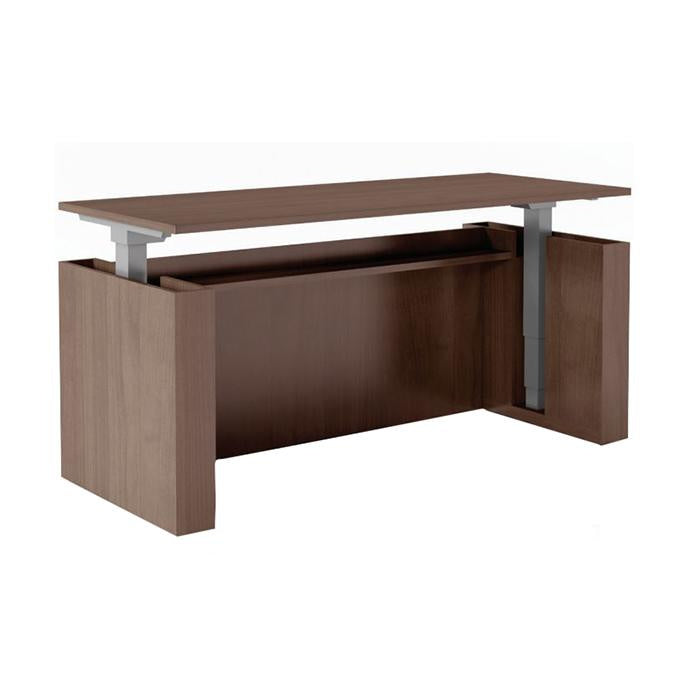
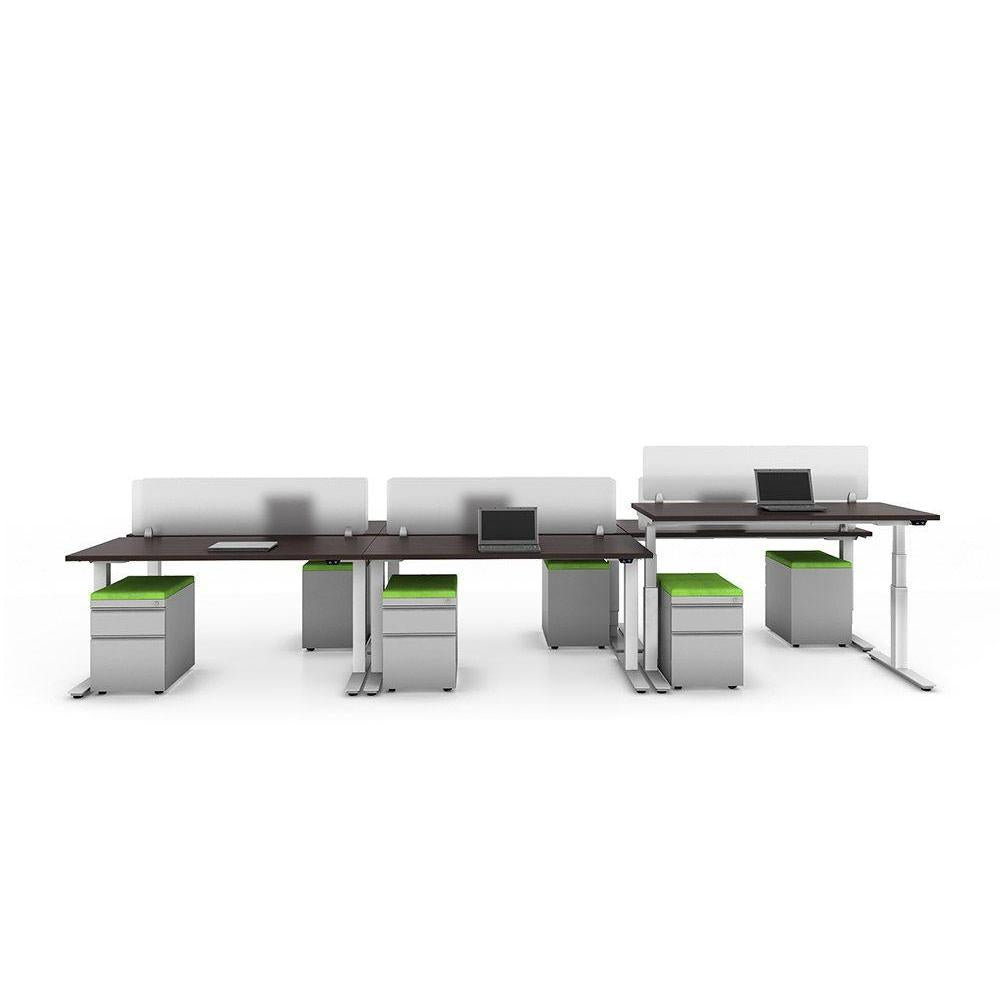
Electric lifting columns are rated for intermittent operation, and this is the most violated spec in the category. Typical ratings run from roughly one minute of movement followed by nineteen minutes of rest, up to about two minutes followed by eighteen. That is a twofold difference between systems, so check the label on your control box rather than assuming. Exceeding the duty cycle overheats the motor, brake, and spindle nut and dramatically shortens the life of the system. A sit-stand desk is for changing posture a few times a day, not for continuous cycling.
Cleaners and disinfectants for these components must be close to neutral, in the pH 6 to 8 band, which rules out a lot of common janitorial chemistry including bleach solutions and many quat concentrates. Never spray liquid directly onto the controller, handset, or control box: apply it to the cloth. Liquid inside a handset is an electrical failure and is generally excluded from coverage.
Remember that rated capacity includes the worksurface, monitors, arms, and CPU holders, not just what you set on top afterward. If the two columns start travelling out of sync, run the controller's reset routine before assuming a motor has failed. That symptom is frequently misdiagnosed.
There is no single published industry interval for a mixed furniture fleet. This schedule is assembled from the intervals individual manufacturers do publish, and it is written for whoever is responsible for the space rather than for a specialist.
| Interval | What to do |
|---|---|
| Daily or as soiled | Wipe shared worksurfaces with mild detergent and rinse. Blot spills the moment they happen. Erase marker boards fully after every use. |
| Weekly | Vacuum seating and cubicle panels with an upholstery attachment. Clean marker boards with board cleaner. Dust veneer along the grain. |
| Monthly | Cycle every chair cylinder through full travel. Cycle locks with their keys. Clean veneer with a wood-formulated cleaner. Paste wax uncoated polished aluminum if you are in humid or coastal air. |
| Quarterly | Re-tighten arm, base, seat pan, and back fasteners on seating. Clear hair and debris from casters. Wipe and wax glides. On sit-stand desks, raise fully and check cable management for pinch or tension, and confirm both columns travel in sync. Paste wax uncoated aluminum elsewhere. |
| Annually | Hot-water extraction on upholstery. Full fleet inspection for tears, abrasions, punctures, stains, and oil marks around head and hand contact points. Replace worn casters and failed cylinders. Inspect laminate seams and edge banding for lifting, and glass edges for chips. |
If you only do one thing from this table, vacuum. It is the lowest-risk action on the list and it addresses the abrasion mechanism that shortens textile life more than anything else.
Cleaning damage is a real and commonly excluded category. Manufacturers state it plainly: improper cleaning and maintenance of any material may void the material warranty, and damage caused by cleaning products outside an approved list is not covered. Aftermarket fabric protector sprays are called out specifically as a cause of premature fabric failure.
The other thing worth knowing before you plan a budget is that headline warranty terms rarely cover the parts that wear. A ten or twelve year warranty on casegoods routinely excludes casters, glides, task control mechanisms, pneumatic cylinders, electrical and mechanical components, foam, and mesh. Those often carry three to five years, or nothing at all. The moving parts are almost always the short-warranty parts. Budget for them as consumables rather than expecting coverage.
Coverage varies by manufacturer and product line. Our product warranties page has the terms for what we sell, and if you are unsure whether a cleaning method is safe for a specific piece you bought from us, ask before you try it rather than after.
Sparingly, and not as a daily routine on every surface. Quaternary ammonium wipes attack the lacquer topcoat on coated fabrics and vinyl, and repeated use on hard surfaces causes dulling, pitting, and eventually corrosion. If you do disinfect, target high-touch multi-user points, let the product dwell for the time on its label, then remove it with a clean water-damp cloth. Never let disinfectant dry in place.
No. Laminate manufacturers classify melamine foam with abrasive cleaners. It is effectively an ultra-fine sandpaper, so it removes the stain by removing the gloss and leaves a permanent dull patch that shows under angled light. Use mild detergent first, then a baking soda paste, then isopropyl alcohol on a cotton ball, and a nylon-bristle brush if you need mechanical help.
Too much liquid. Excess water wicks outward through the fabric carrying dissolved soil with it, then deposits that soil as a hard tide line where it dries. The ring is the original dirt relocated to the edge. Use several light applications rather than one heavy one, blot from the outside of the stain inward, and never let liquid pool in the seams.
Only if that panel fabric's cleaning code allows it. Manufacturers disagree here more than anywhere else, and at least one prohibits liquid on panel cloth entirely across all its product lines. If you cannot find the code, treat the panel as dry-clean-only. Vacuuming is the primary approved method for nearly all panel fabric, and brushing is not, because it permanently damages the nap.
Hot-water extraction on upholstery once a year is the published interval for performance fabrics. Everything else is driven by soiling rather than the calendar. The routine that matters more is weekly vacuuming of seating and panels, because trapped grit acts as an abrasive and wears fabric out before its time.
Yes. Manufacturers state that improper cleaning and maintenance may void the material warranty, and some scope coverage to an enumerated list of approved cleaning products. Aftermarket fabric protector sprays are specifically documented as a cause of premature fabric failure. When in doubt, test in a hidden area and check the manufacturer's guidance for that specific piece.
Send us a photo and tell us what you are trying to remove. If you bought it from us we can check the material and the manufacturer's guidance for that specific piece before you try anything on it.
Ask our team See warranty termsMore from the Resource Center: Cubicle Buying Guide · Commercial-grade vs. big-box furniture · What is BIFMA?