LTL Freight Shipping Explained
What to expect when your new furniture ships by pallet, not by parcel
If you've ever ordered a desk or a set of conference chairs and been surprised that it doesn't show up in a cardboard box on your porch, you're not alone. Commercial office furniture is usually too large, heavy, or fragile to ship the way a package from an online retailer does. Instead, it typically travels by LTL freight. Understanding how that works can save you time, money, and a few surprises on delivery day.
What Does "LTL" Mean?
LTL stands for Less Than Truckload. Instead of your order filling an entire semi-trailer, it shares space with other businesses' freight, all loaded onto pallets. Your furniture is strapped and wrapped onto a pallet at the warehouse, then loaded alongside other shipments heading in a similar direction.
This is different from parcel shipping (think UPS or FedEx ground), which is built for small, lightweight boxes. Office furniture (desks, filing cabinets, conference tables, bulk chair orders) is usually too heavy, too large, or too easily damaged to survive that kind of handling, so it moves by freight carrier instead.
How Freight Delivery Is Priced
Your freight rate is calculated in the cart before you check out, and the number you see is the number you pay. What changes it is the delivery service your building needs, which you choose at checkout:
-
I have a dock or forklift. Your building has a loading dock at trailer height, or a forklift and someone trained to operate it.
-
No loading dock (liftgate). A liftgate is a powered platform that lowers your shipment from the truck bed to ground level. This is the right answer for most offices, storefronts and homes.
-
School, church, government or restricted site. Locations that carriers charge extra to serve, or sites that require a scheduled appointment or an escort.
Choosing the option that matches your building is the one decision that most affects both what you pay and whether the delivery goes smoothly. Our shipping overview walks through how to pick the right one, and what happens if the wrong one is selected.
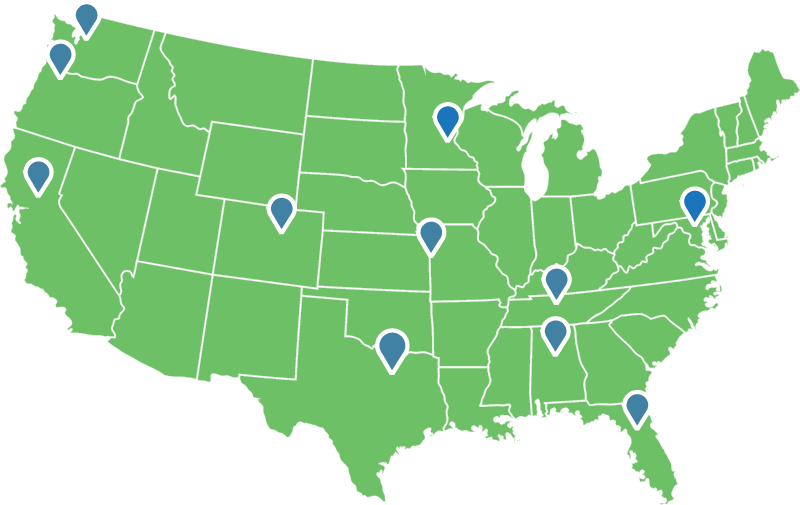
Standard freight rates cover the 48 contiguous states and the District of Columbia. We ship to Alaska, Hawaii and Puerto Rico as well, but those are quoted individually rather than at the standard rate, so contact us before ordering and we will price the freight up front.
What to Expect on Delivery Day
-
You may get a call to schedule delivery. Unlike parcel carriers, freight terminals sometimes call ahead to arrange a window, since someone needs to be present to receive and inspect the shipment. It does not happen on every shipment, so do not wait for a call before making sure someone will be there.
-
Curbside is standard unless you've arranged otherwise. Most LTL deliveries are dock-to-dock or curbside. If you need help getting a heavy item inside, ask us before the order ships. It's far easier to arrange up front than last-minute.
-
Inspect before you sign. This is the single most important step. Before signing the delivery receipt, check the pallet for visible damage (crushed corners, torn shrink wrap, tilted boxes). If you see damage, note it on the delivery receipt in writing before signing. A clean signature can make it difficult to file a damage claim later, even if you discover the problem once you unpack.
-
Have a plan for the pallet and packaging. Freight deliveries come with more packaging material than a typical parcel order, like wood pallets, corner guards, heavy plastic wrap. Know where you'll stage it before the truck arrives.
Tips to Make the Process Smoother
-
Confirm dock or ground-level access at your location when you place your order. This is the single biggest factor in whether you'll need a liftgate.
-
Know the timing. In-stock orders typically leave the warehouse in 2 to 4 business days, depending on which warehouse ships your order and how large it is. Transit time after that depends on your proximity to a regional distribution center.
-
Have someone available at delivery. Unlike a parcel left on a porch, freight deliveries require a signature and someone present to receive the shipment.
-
Keep your order confirmation handy. If any issue comes up with the carrier, having your PO number and pallet details on hand speeds up the resolution.
The Bottom Line
Freight shipping isn't more complicated than parcel shipping, it's just different, with its own rhythm and a few extra steps. Once you know what to expect, it becomes a routine part of ordering commercial furniture rather than a source of surprises.
If you have questions about how your specific order will ship, our team is happy to walk through the details before you buy. Call us at 877-226-2244 or reach out during checkout for a shipping estimate specific to your location.