Choosing office chairs sounds simple until you're the one responsible for outfitting a whole office, and the wrong choice shows up fast: complaints about back pain, chairs that wear out in a year, or a reception area that looks mismatched with the rest of the space. This guide walks through what actually matters when buying commercial office chairs, so you can make a confident decision the first time.
Not every chair needs to do the same job. Before looking at features or price, think about who will sit in it and for how long.
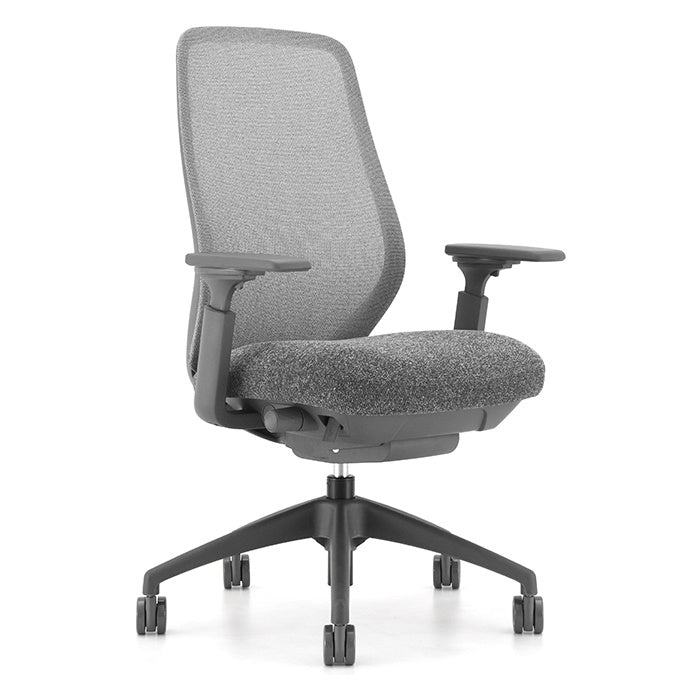
All-day task chairs. For employees sitting at a desk seven or eight hours a day, comfort and adjustability aren't optional. These chairs need to support long stretches of sitting without causing fatigue, and small ergonomic details matter far more here than in any other category.
Conference and meeting room chairs. These are used for shorter stretches, often an hour or two at a time, so comfort still matters but durability and appearance often take priority. A conference room is also a space clients and visitors see, so consistency and a polished look carry real weight.
Guest and reception chairs. Comfort matters less here since sit times are short, but first impressions matter more. These are often chosen to match a lobby's design rather than for ergonomic performance.
Executive chairs. These combine higher-end materials and a more substantial look with the same ergonomic needs as a task chair, since executives are usually sitting for long periods as well.
Once you know which category you're buying for, the rest of the decision gets much easier.
"Ergonomic" gets used as a marketing word more often than a meaningful one. Here's what to actually look for, especially for all-day task chairs.
Seat height adjustment. This is the baseline requirement. Feet should rest flat on the floor with knees at roughly a 90 degree angle. Every task chair should offer this adjustment, and it's rarely worth buying one that doesn't.
Lumbar support. Lower back support prevents slouching and reduces strain over a long day. Some chairs offer adjustable lumbar support (height and depth), which is worth paying for if employees vary in height. Fixed lumbar support can still work well, but it's less forgiving for a mixed group of body types.
Seat depth adjustment. This lets the seat pan slide forward or back so the edge of the seat sits just behind the knees, regardless of a person's leg length. It's a smaller feature that's easy to overlook, but it matters a lot for taller or shorter employees.
Armrest adjustability. Height adjustable armrests are standard on most quality chairs now. Width adjustable and pivoting armrests add more range but also add cost, and are more useful for employees who work at varied tasks (typing versus writing versus using a mouse) throughout the day.
Recline and tilt tension. A chair that reclines with adjustable tension lets a person lean back to rest without feeling like the chair is fighting them or falling backward too easily. Look for a tilt lock feature so the chair can also be fixed upright when needed.
Seat and back material. Mesh backs are breathable and popular in warmer climates or open offices, while foam and fabric backs tend to feel more supportive over long periods and often look more traditional in an executive setting. Neither is universally "better," it comes down to preference and the look of the space.
Commercial furniture is built differently than what you'd find in a big box furniture store, and this is where the price difference often comes from.
Base and frame. A steel or reinforced nylon base holds up far better under daily commercial use than a lightweight plastic one. Look for a five point base (five wheels) rather than four, since it's more stable and less prone to tipping.
Casters. The wrong caster can damage flooring or wear out fast. Hard casters are made for carpet, while soft rubber casters are designed for hardwood or tile. Mismatching these leads to either poor mobility or floor damage, so check flooring type before ordering.
Weight capacity. Commercial chairs are usually rated for a specific weight capacity, often 250 to 300 pounds for standard chairs and higher for big and tall models. Match capacity to your team's needs rather than assuming a "standard" chair covers everyone.
Warranty length. This is one of the best signals of build quality, and a key differentiator of USDO's seating options. Many commercial grade task chairs carry warranties of a few years, while budget chairs may only offer one year or no warranty at all. US Discount Office Furniture's limited lifetime warranty reflects our genuine confidence in the components, not just marketing.
Office chair prices can range from under $150 to over $1,000, and the difference isn't always obvious at a glance. Here's where the money typically goes:
A useful way to think about it: a chair an employee sits in eight hours a day, five days a week, is one of the most heavily used pieces of furniture in your office. Spending a bit more here often pays off in fewer replacements and fewer complaints down the line.
Buying one chair style for every role. A single chair rarely works well for reception, task work, and conference rooms all at once. It's usually better to choose a few different chairs suited to each space than to force one option everywhere.
Buying from a big-box store. In commercial settings, ergonomics and durability matter. While a chair may look nice or seem like a great deal, you'll end up regretting saving a few dollars when the low-quality materials start to give out and employees complain of back pain.
Ignoring caster and flooring compatibility. This is a small detail that causes real problems, either scratched flooring or chairs that don't roll properly.
Underestimating lead times. Commercial chairs, especially in bulk, often ship by freight rather than parcel, and larger orders can take longer to fulfill than a quick online purchase might suggest. Planning ahead avoids a rushed decision.
The right office chair depends less on finding the single "best" chair and more on matching the right chair to the right use. A task chair built for eight hour days, a conference chair built to look sharp for two hour meetings, and a reception chair built to make a good first impression are three different jobs, even though they're all technically "office chairs."
If you're outfitting a full office and want help narrowing down options based on your specific space, team size, or budget, our team is happy to walk through recommendations directly. Reach out anytime, we're glad to help you get it right the first time.